We Built the Intelligence. Nobody Knew It Existed.
Lead Product Designer (End-to-End Ownership)Cloud Software Group — WebFOCUS • Spring 2024 – Spring 2025

IQ Plugin Prototype • Workflow Walkthrough with Voiceover
NLQ buried inside a popup. Insights hidden in a submenu. Predictive Machine Learning locked inside complex data flow canvases. We had built powerful enterprise ML capabilities, but because they were fragmented across the platform, adoption was sitting at near-zero.
Three distinct ML features relying on three entirely different entry points and mental models. Leadership assumed our underlying forecasting models weren't robust enough. The truth was far simpler: We didn't need to scrap our AI architecture. We just needed to consolidate it into a unified, discoverable surface.
My PM Karishma and I conceived the Hub together. My Director of Design and Head PM shaped the vision with us. Karishma pitched. VP approved. We owned it end-to-end.
The Fragmented Landscape
Path 1 — Finding NLQ or Insights
4 clicks · buried in a popup · side-by-side tabs
Path 2 — Finding Predict Data (ML)
4 clicks · completely different path · different mental model
Two separate paths. Two mental models.
No wonder nobody found them.
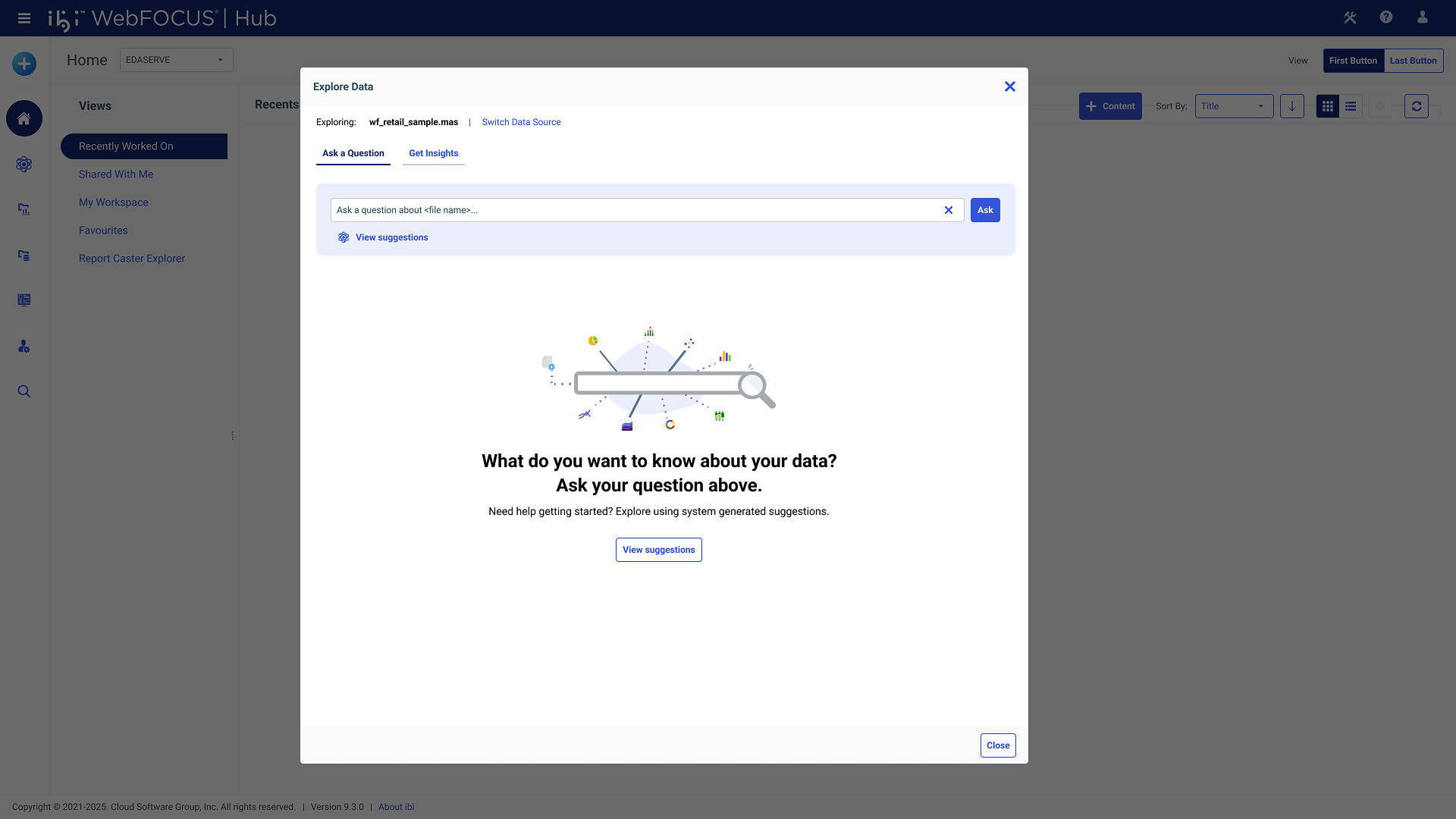
NLQ — buried in 'Explore Data' popup
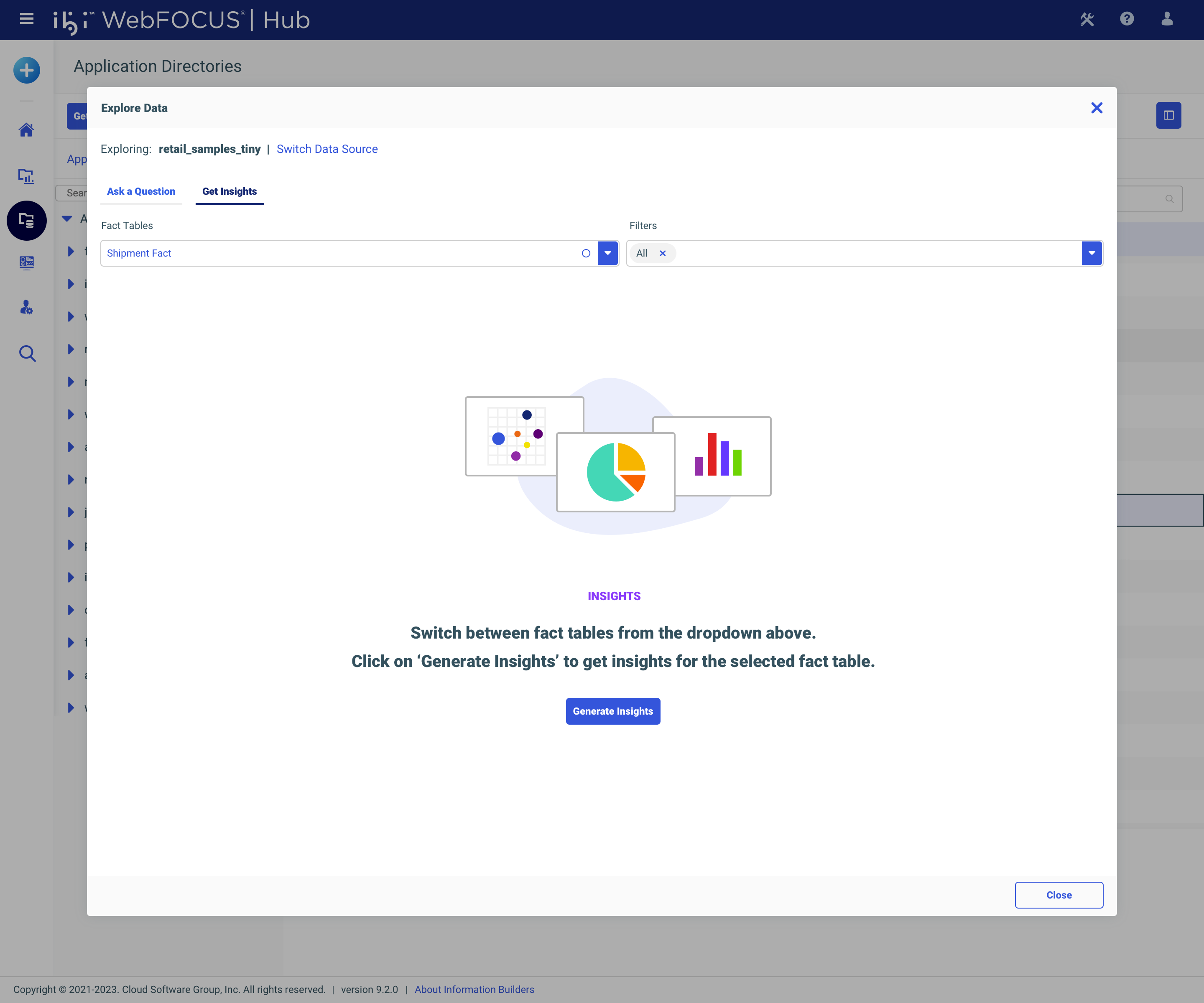
Old Workflows
NLQ (Natural Language Query)
Automated Insights
ML Functions (Predict Data)
I already owned NLQ and ML. Insights landed in my lap — same engineering team, same PM, same QA. Before unifying them, I modernized each one individually.
NLQ Redesign
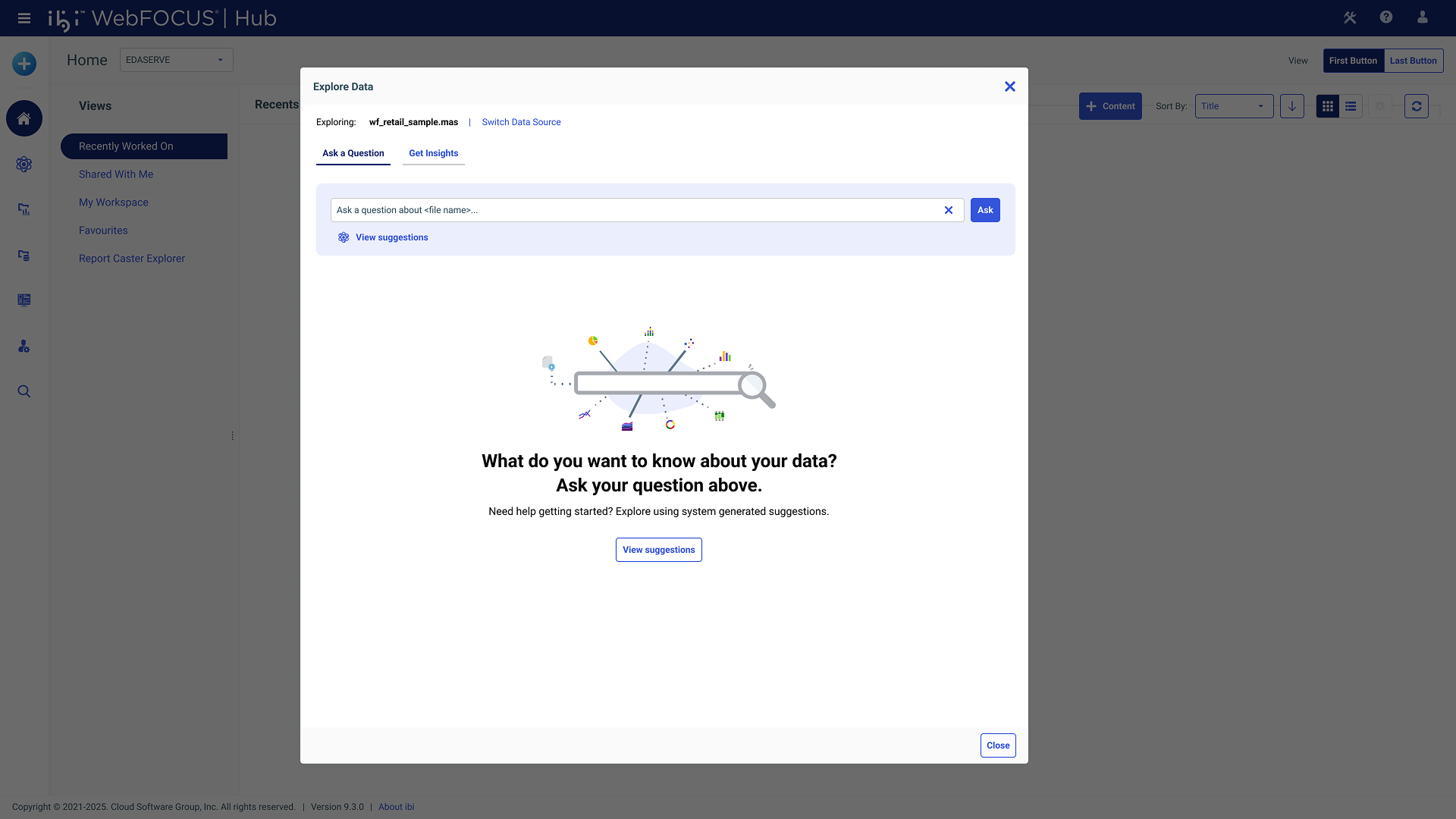
Suggested queries, conversational errors
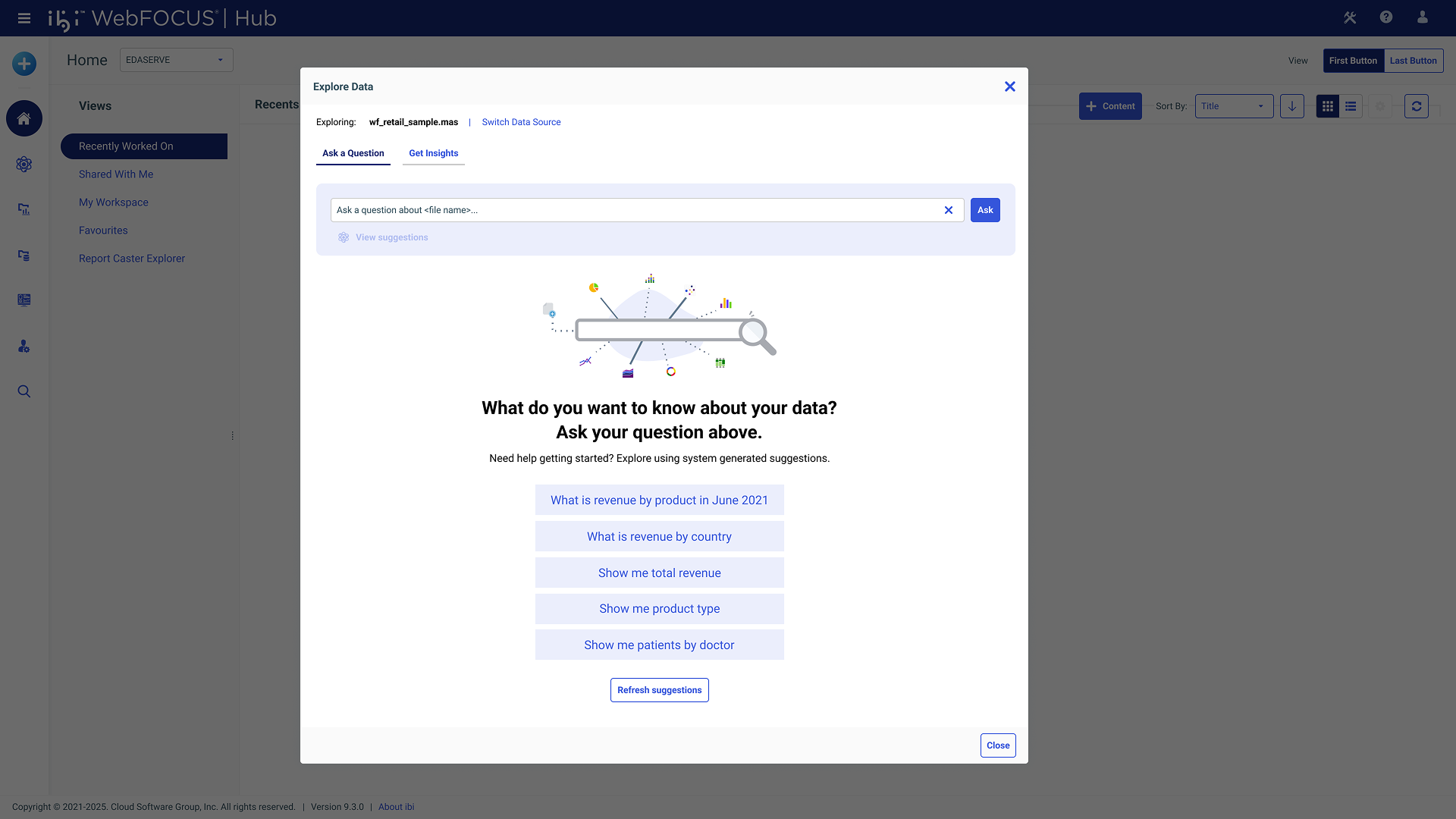
Zero-intimidation entry point
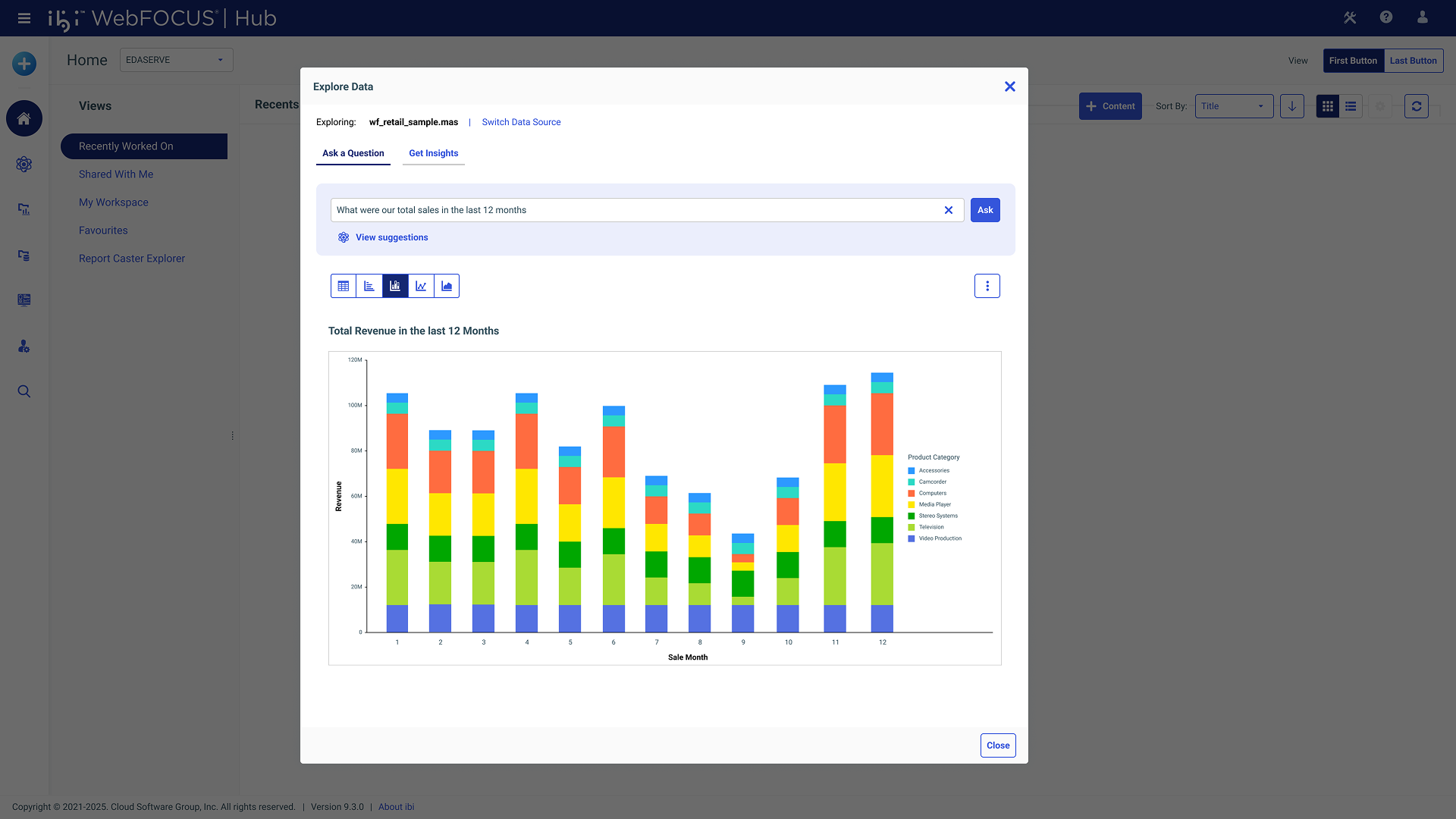
AI-generated chart from natural language
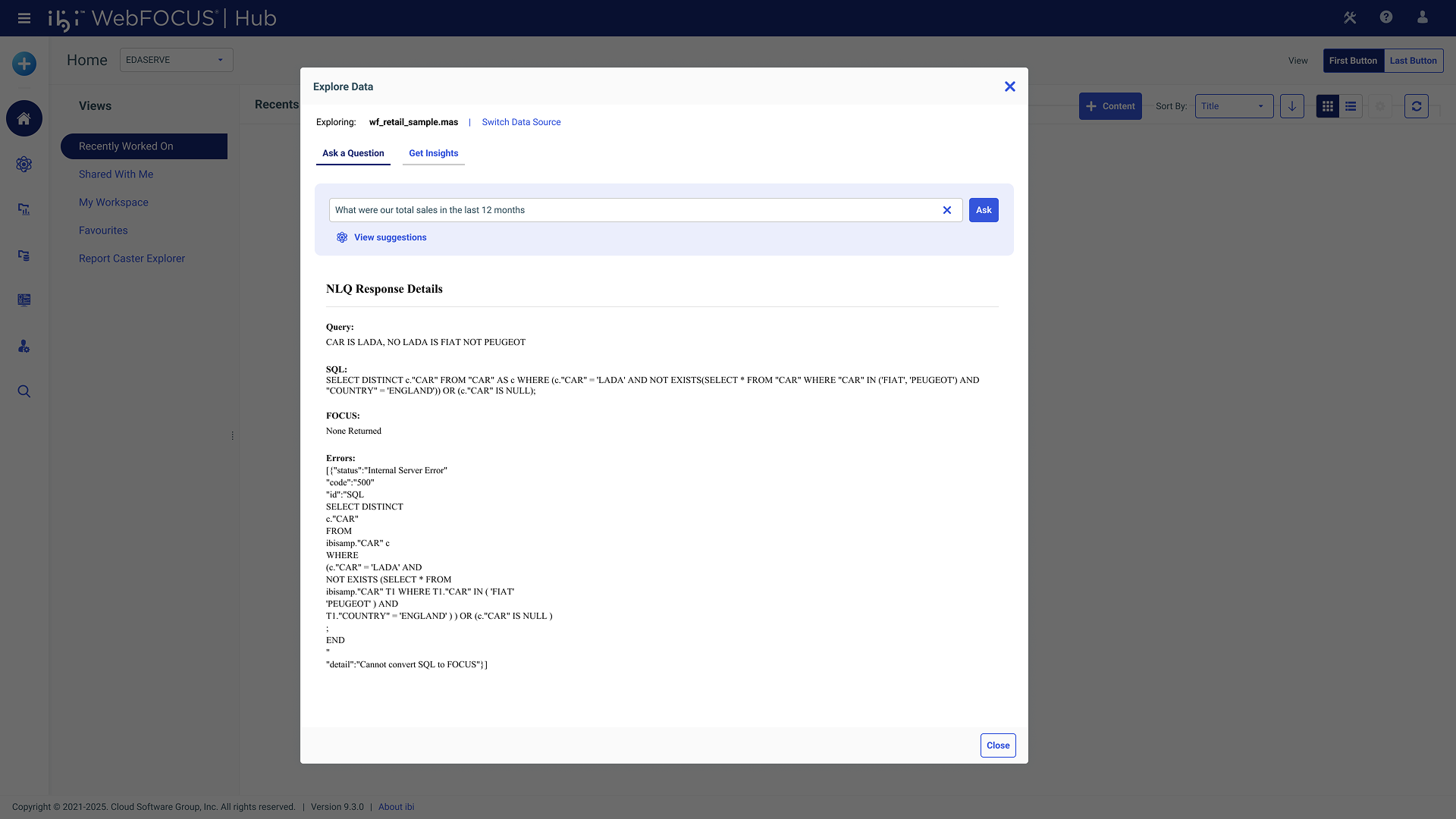
Conversational errors — not stack traces
Insights Redesign
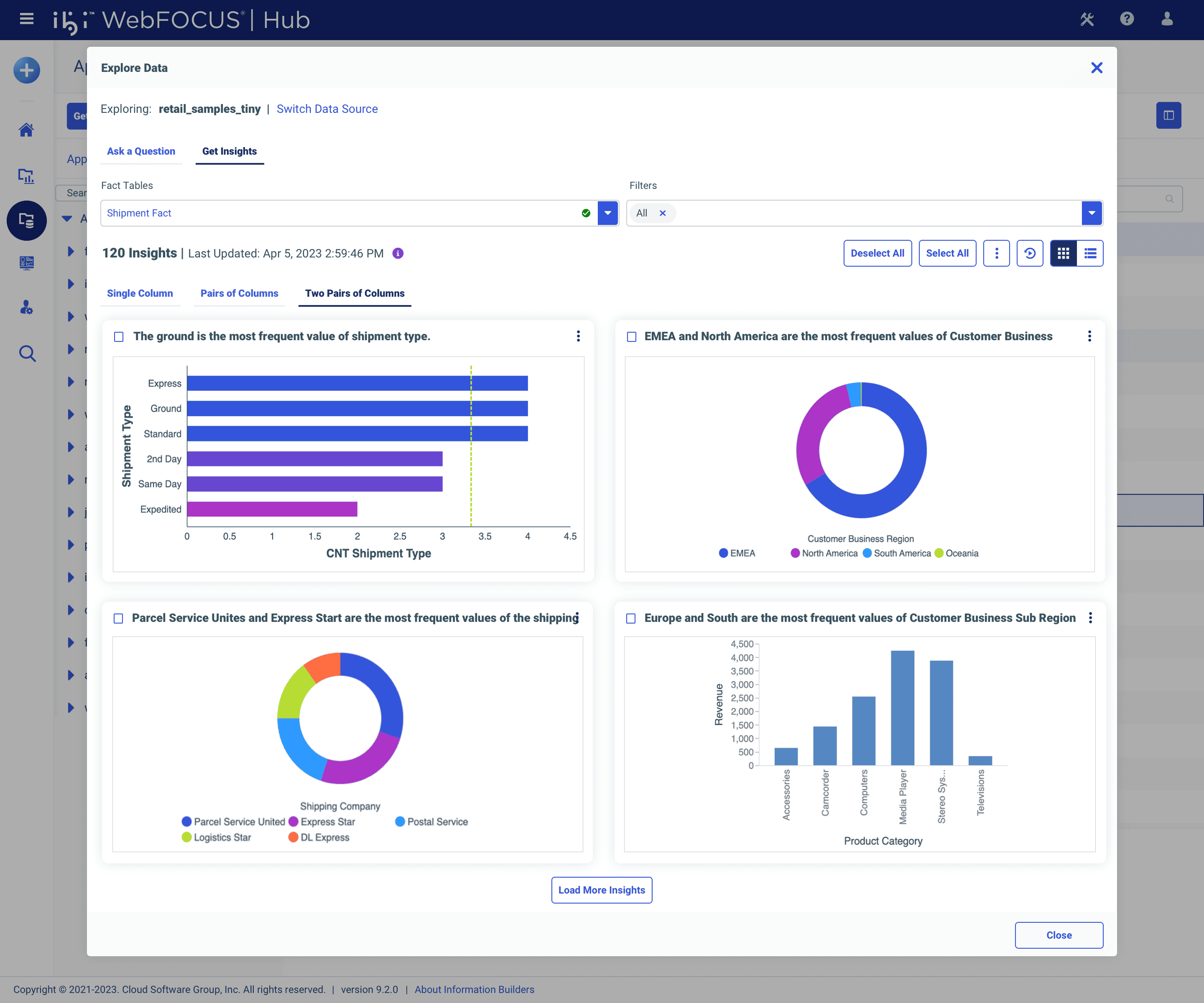
Auto-generated insight cards
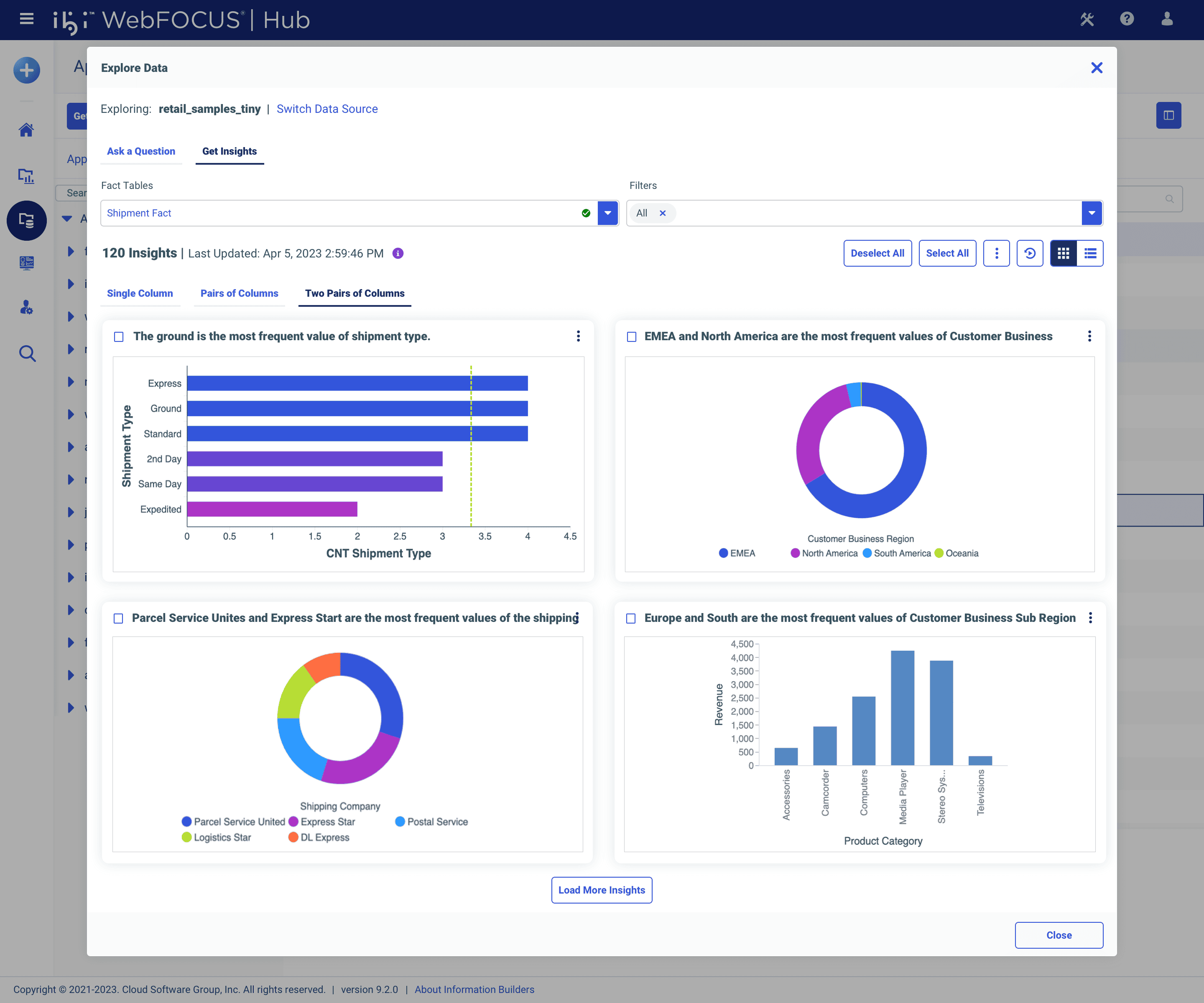
Scannable card-based results
I pushed for things never done in the org. Karishma wrote tickets after seeing my mockups. 3–4 meetings a week across timezones — architecture already mapped before anyone asked.
The Solution — One Click
After — Everything Under One Roof
IQ Architecture
Smart integration inside the existing Hub. No new infrastructure needed. Three scattered menus → one destination, one mental model.
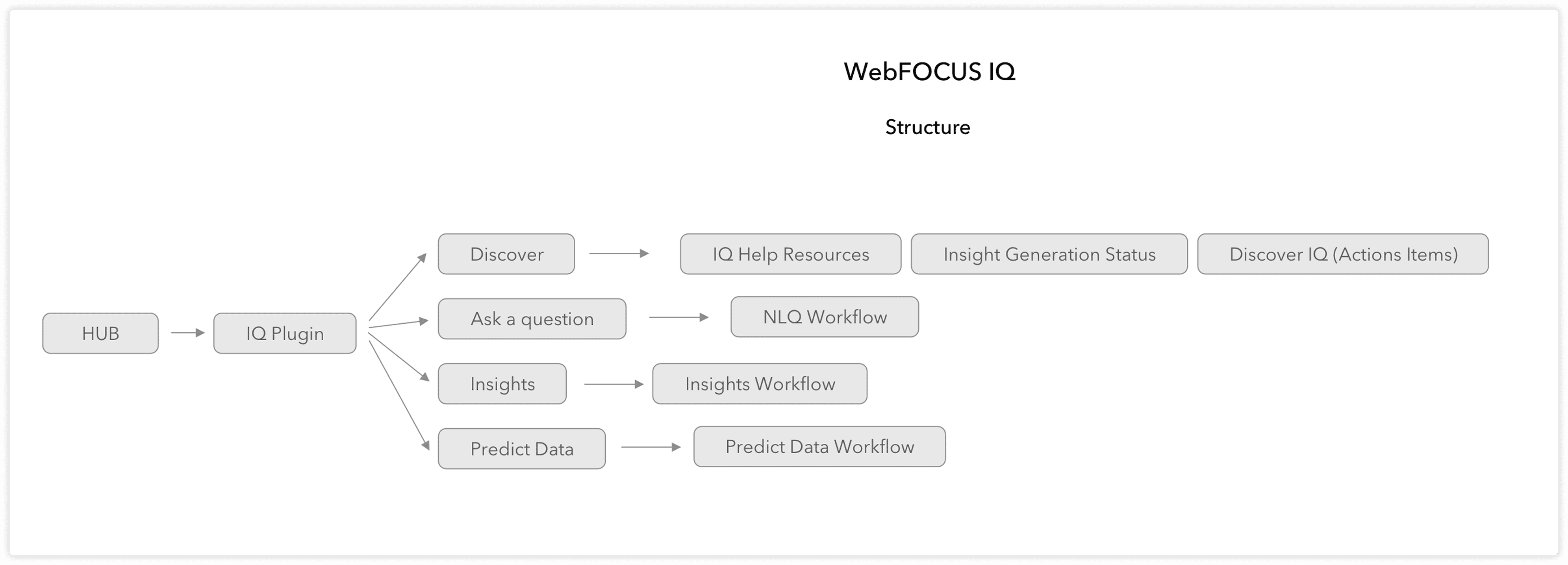
IQ Plugin architecture — NLQ, Insights, and ML under one Hub
Dataset Selection Workflow
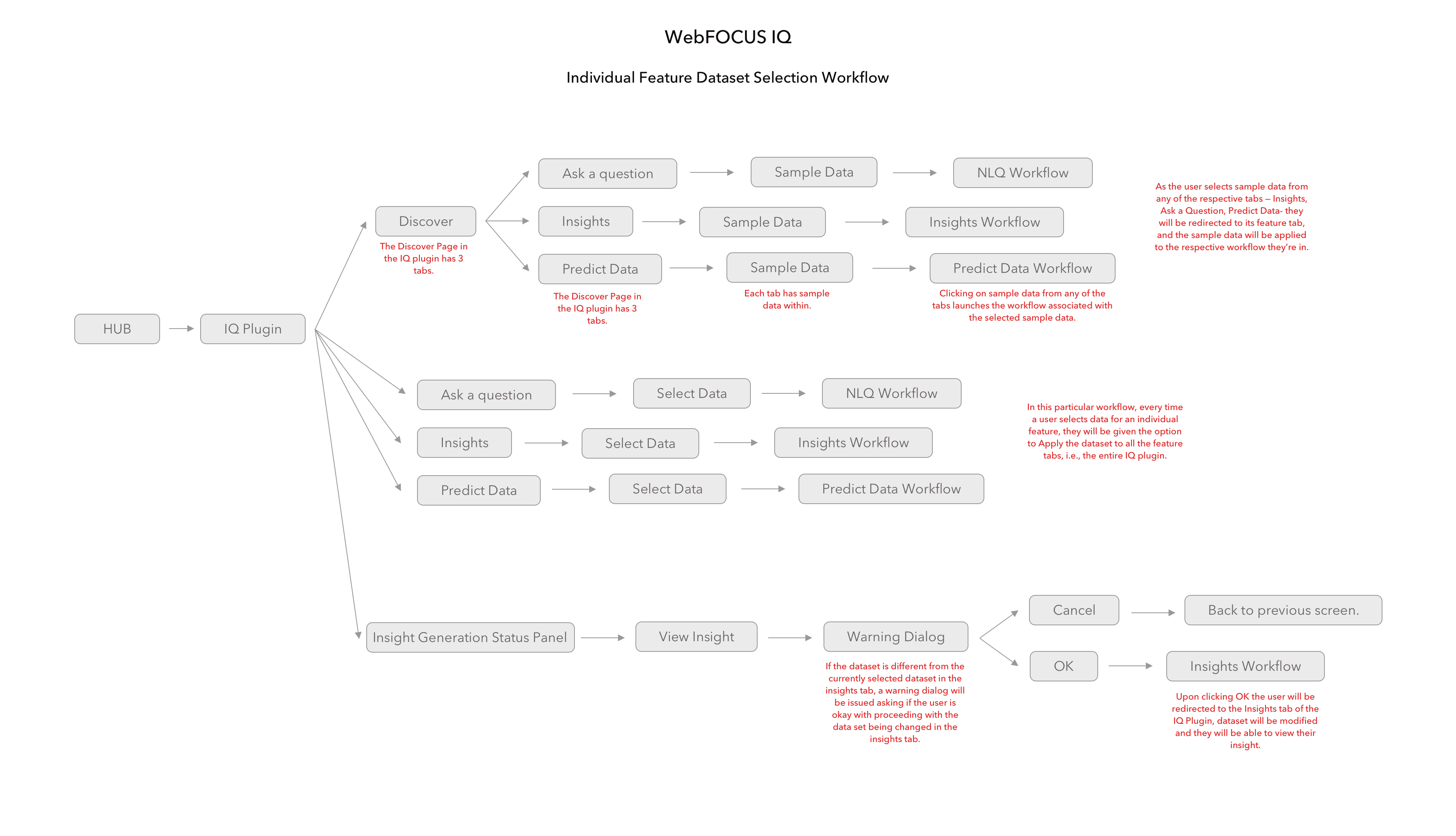
Unified dataset selection workflow
Hub Layout
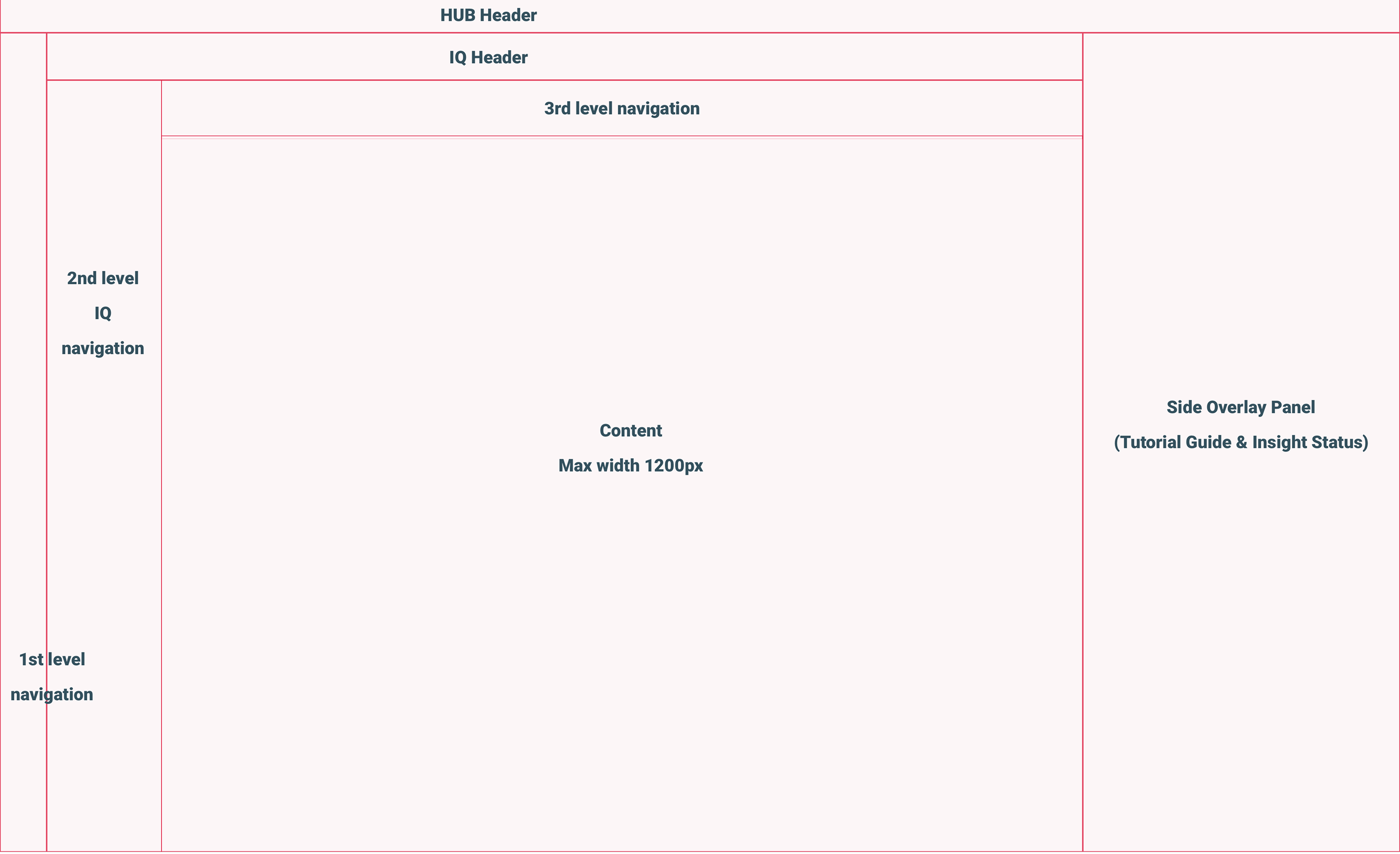
How IQ fits into the existing Hub layout
Sketches & Early Concepts
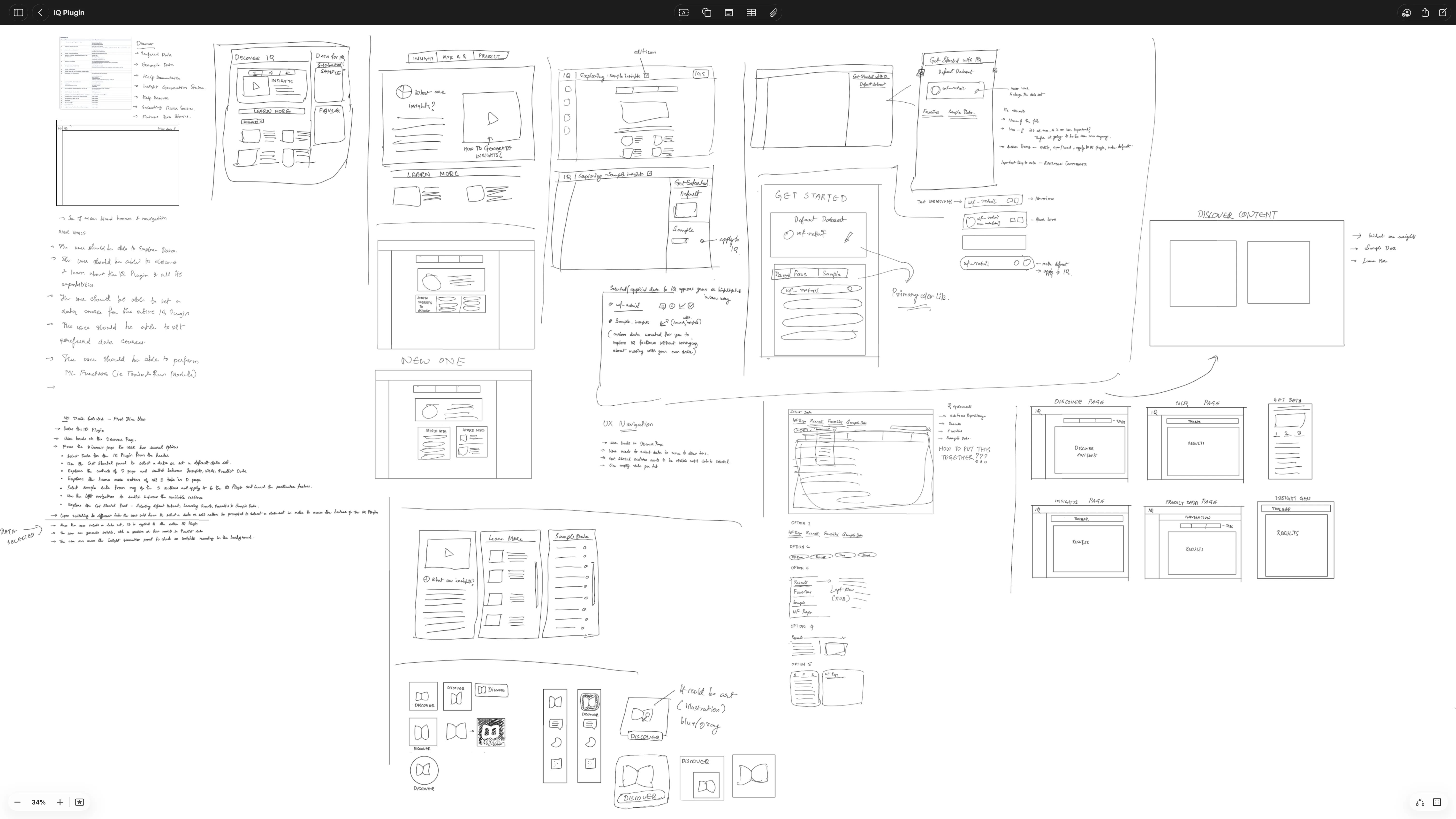
Early concept sketching
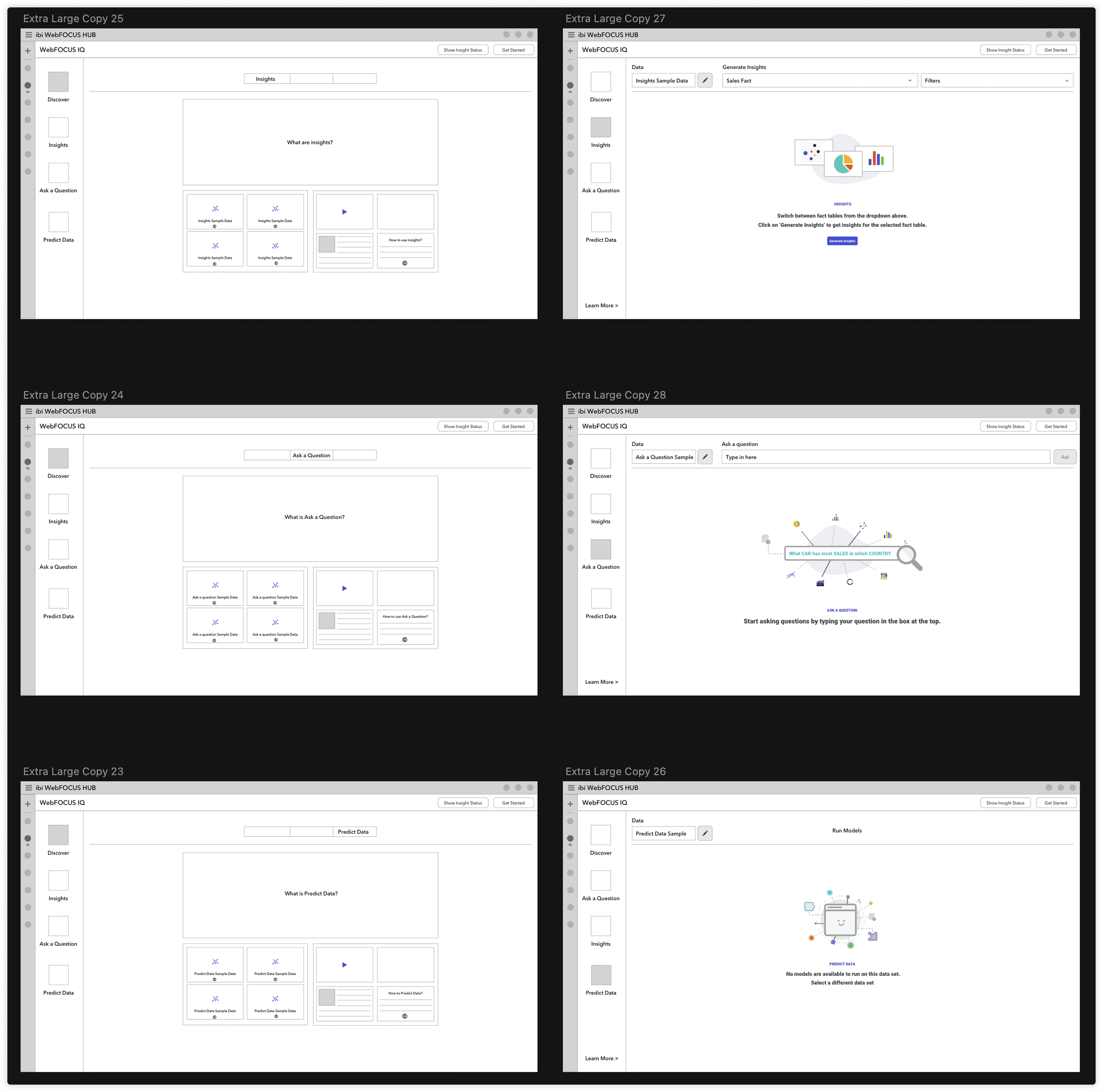
Architecture wireframes
Responsive Design
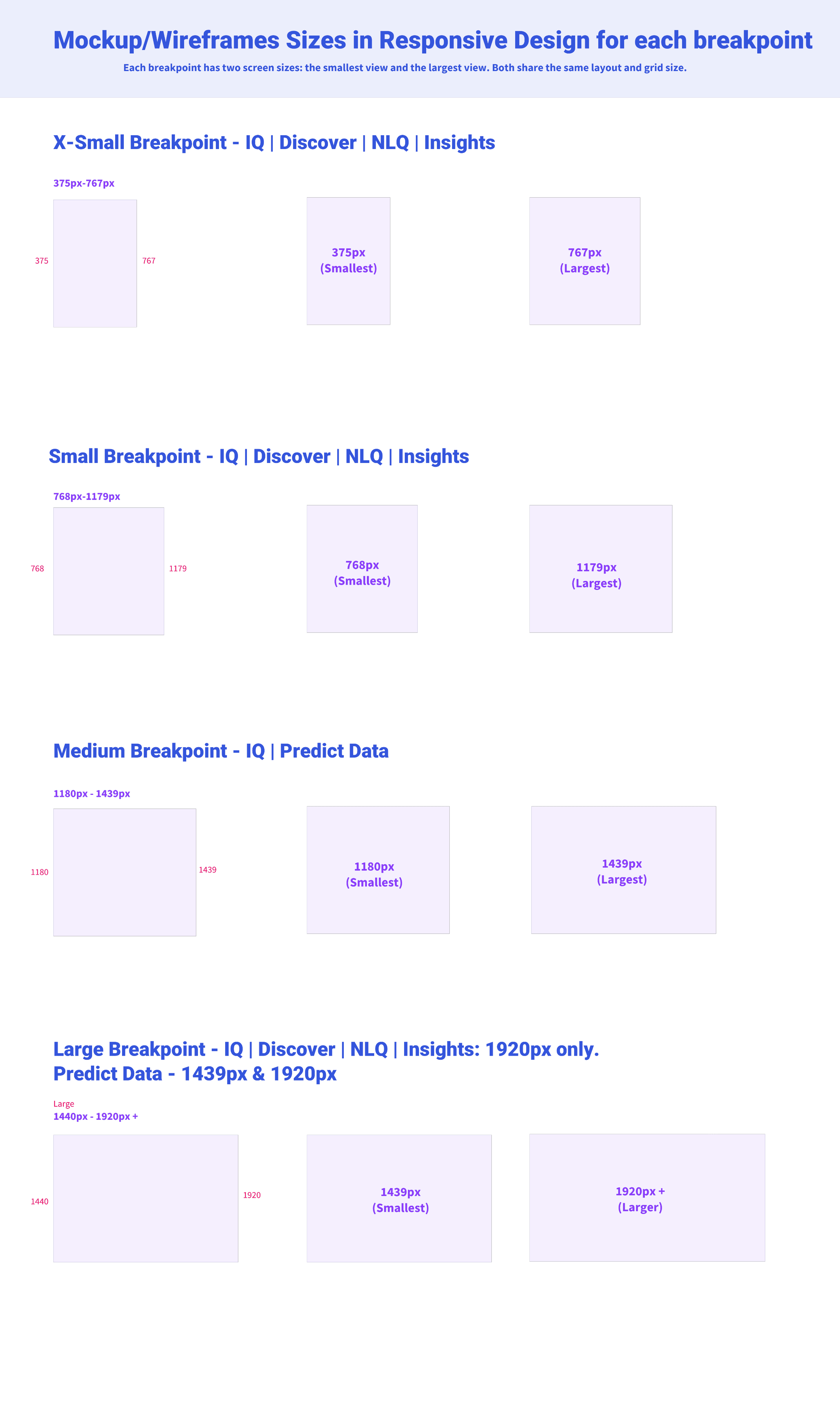
First fully responsive Hub app
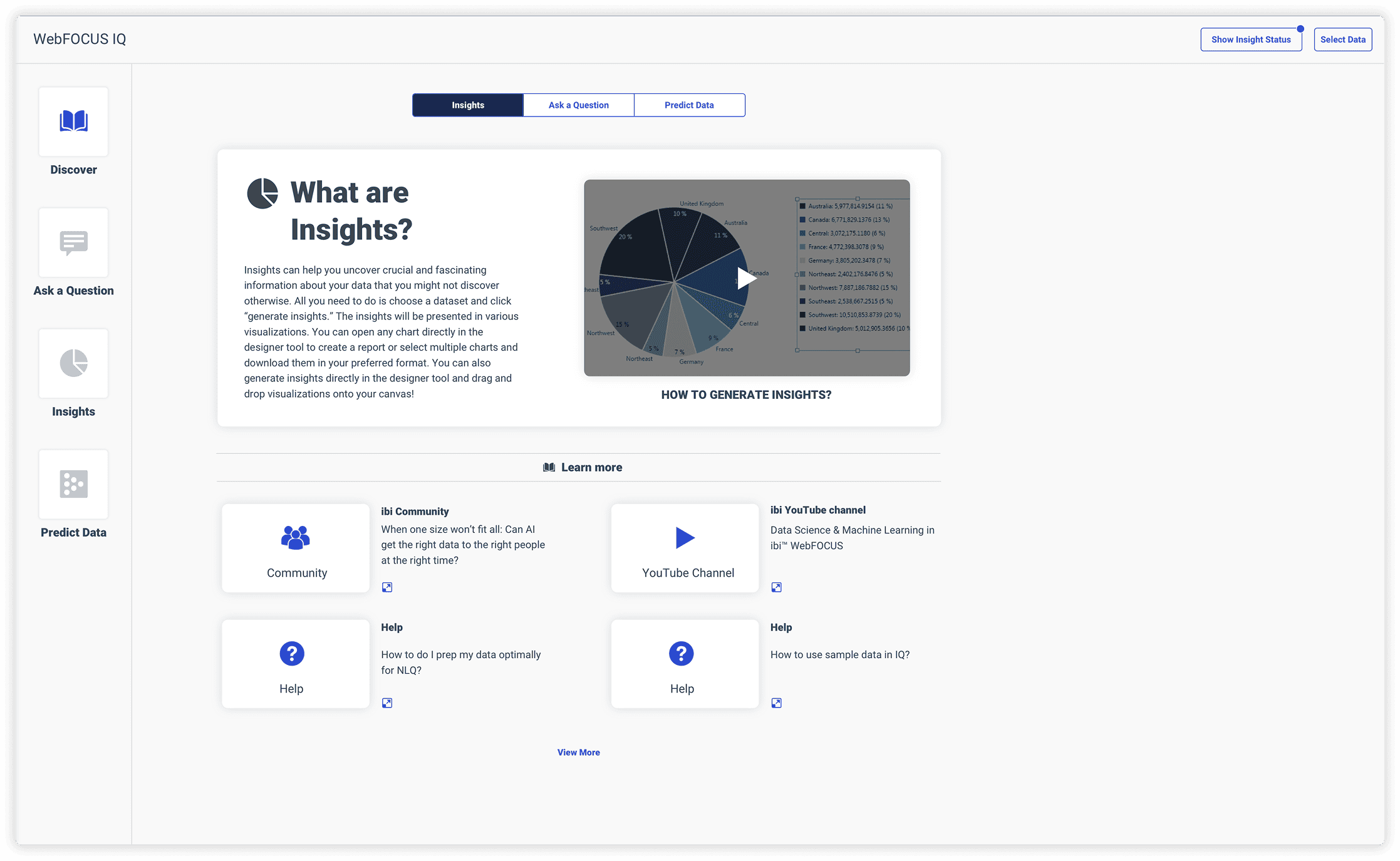
V1 too dense. V2 too passive. V3 competed with Hub navigation. V4 — clean icon tiles — landed.
Design Iterations
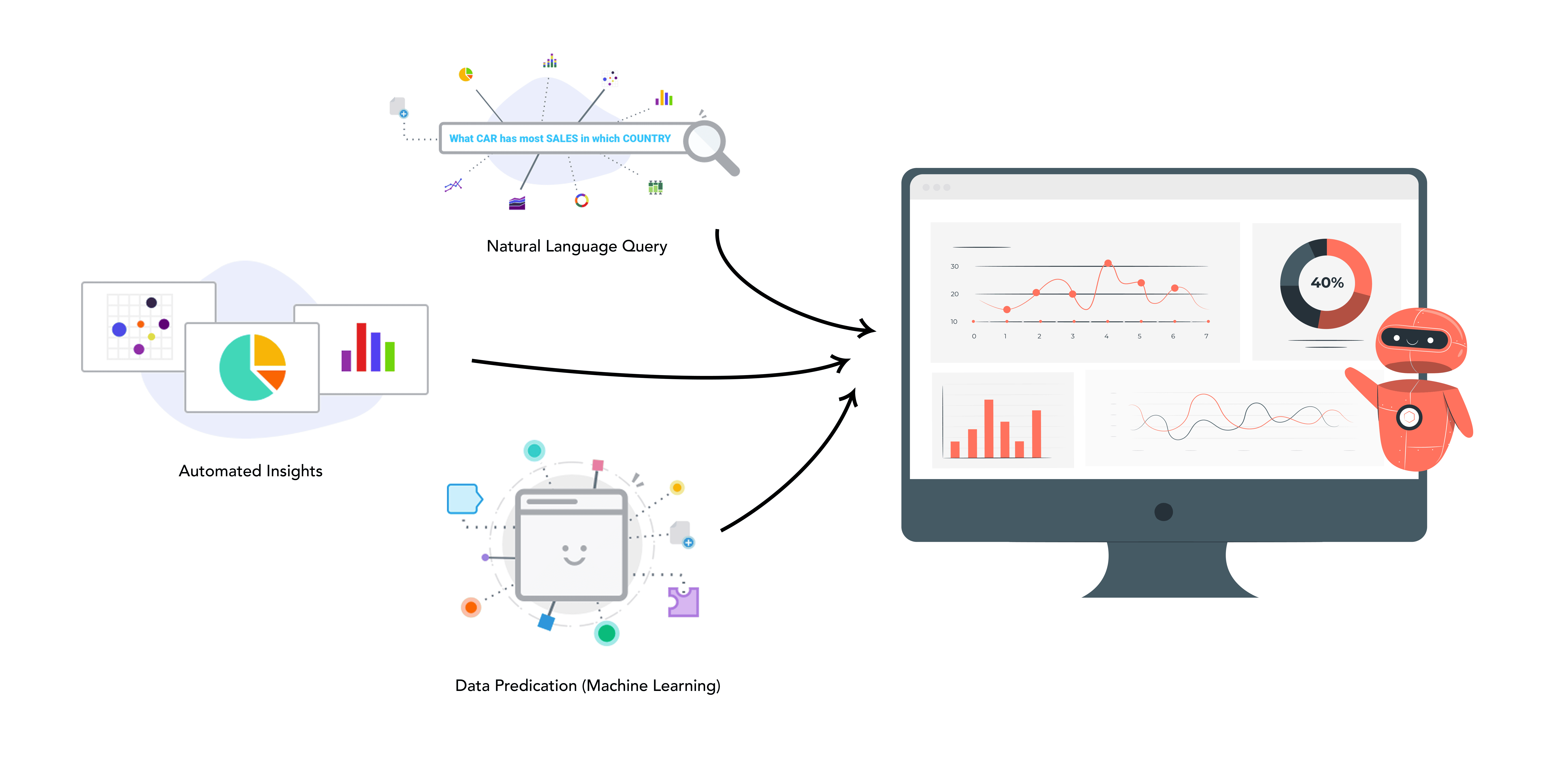
IQ Hub concept: NLQ + Insights + ML in one place
V1 — Too Dense
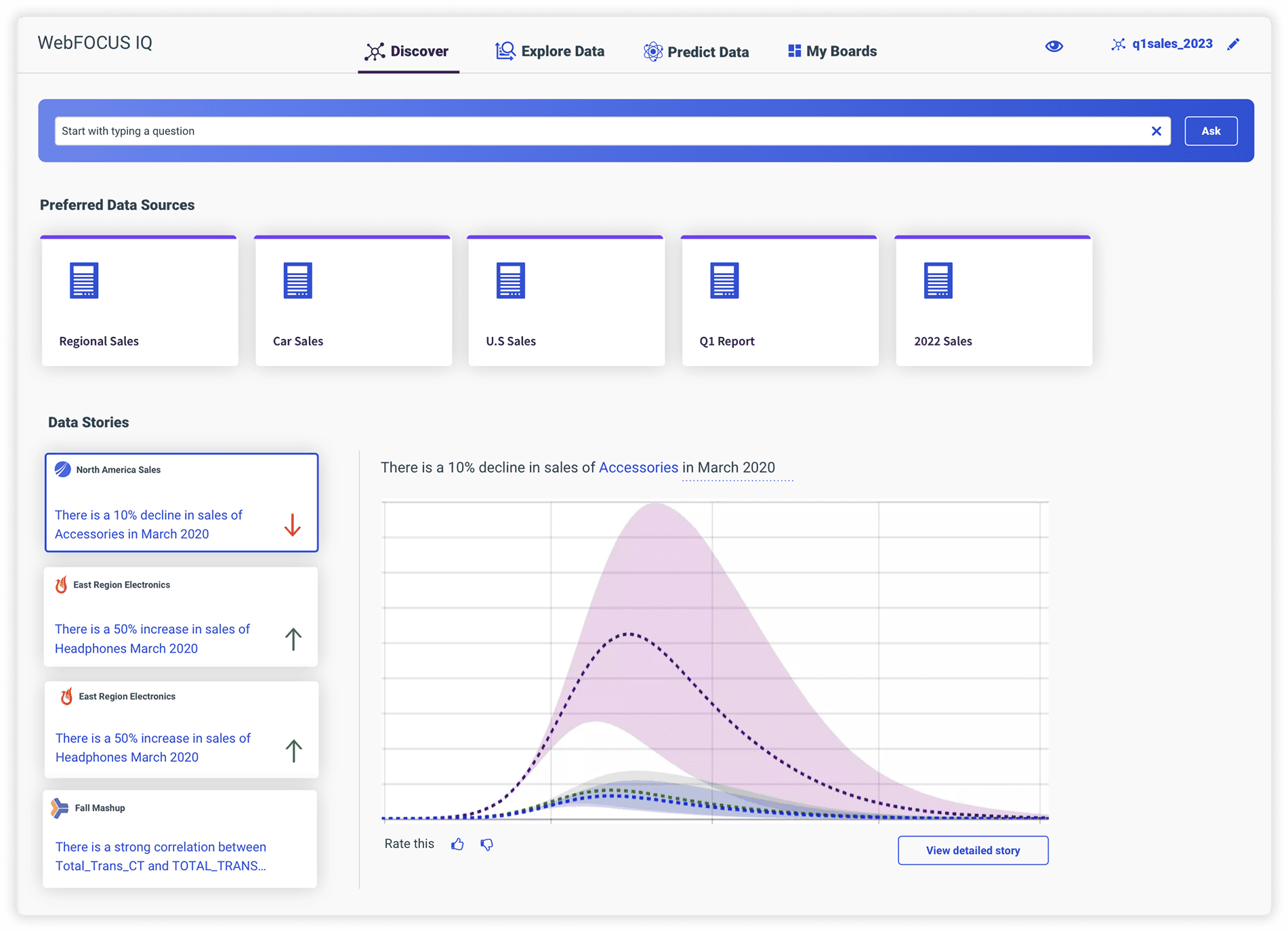
First concept — too much information
V2 — Too Passive
Second iteration — too sparse
V3 — Competed with Hub Nav
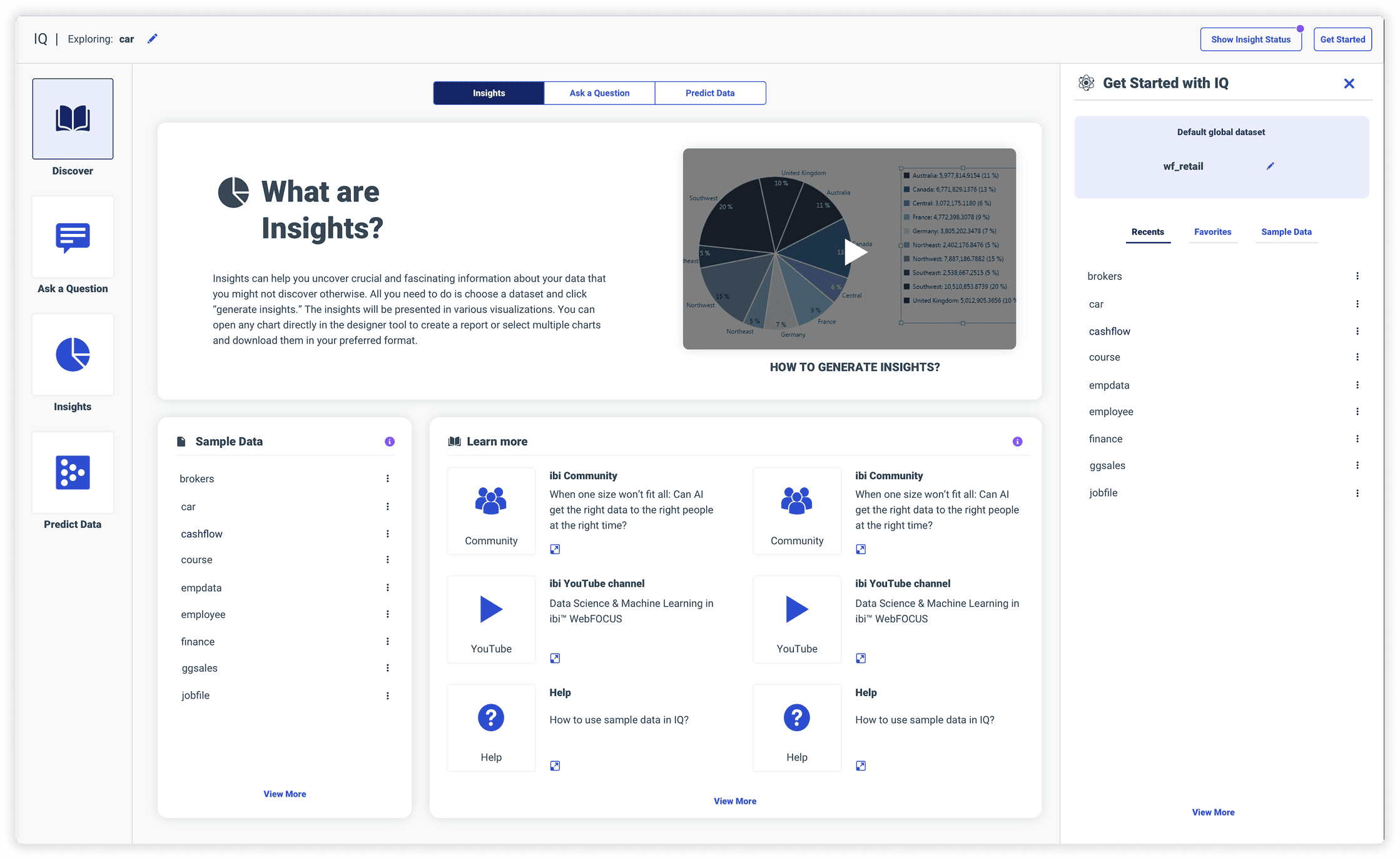
Third iteration — competed with Hub navigation
V4 — Shipped ✔
The lead architect — 20+ years — wanted list views. The WebFOCUS architect — 35+ years — backed him. My argument: lists are exactly why nobody found these features. Large tiles give immediate context.
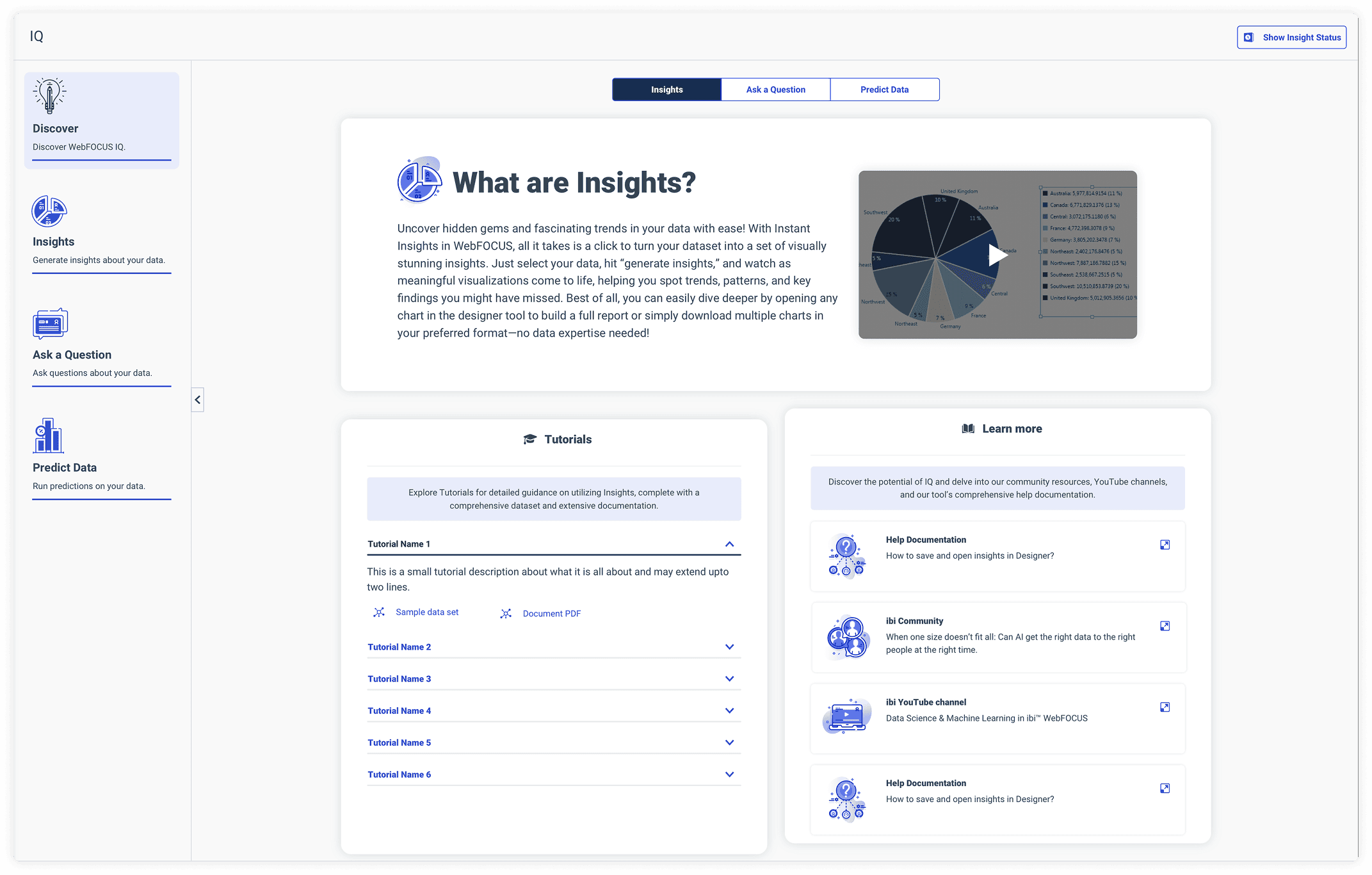
The final IQ Discover page — shipped
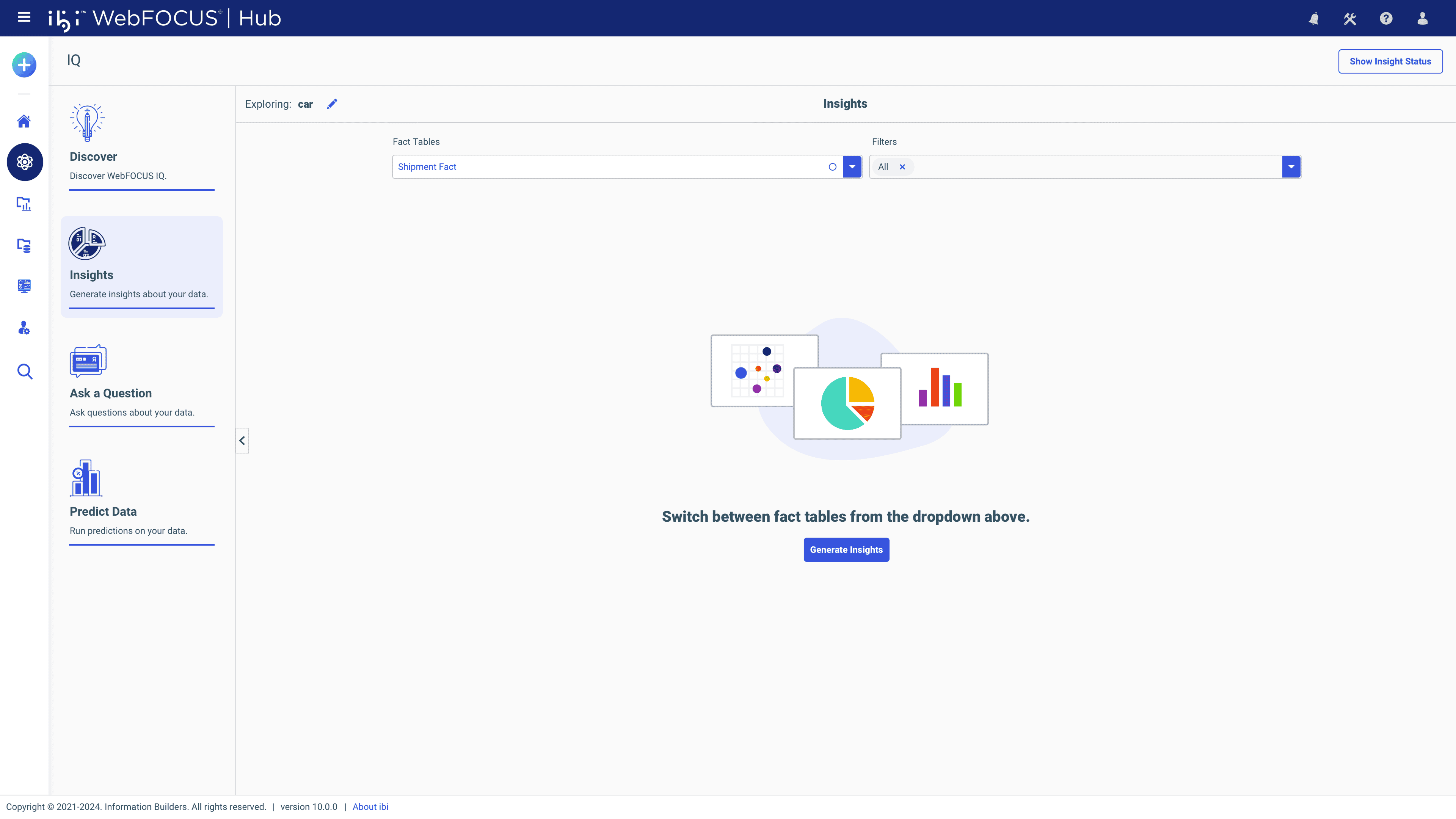
Insights in IQ
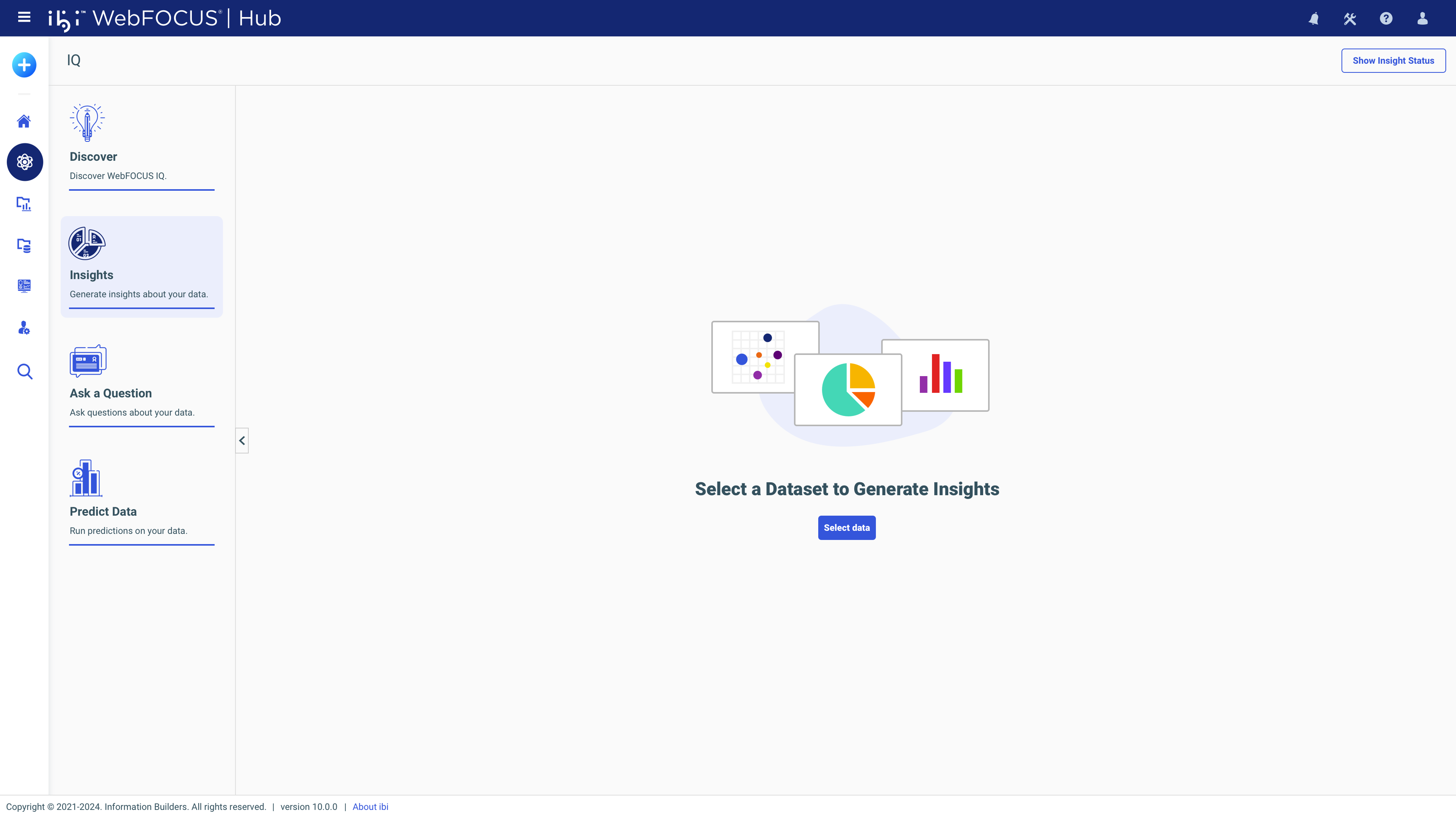
Insights: Empty state
Insights: Data selected
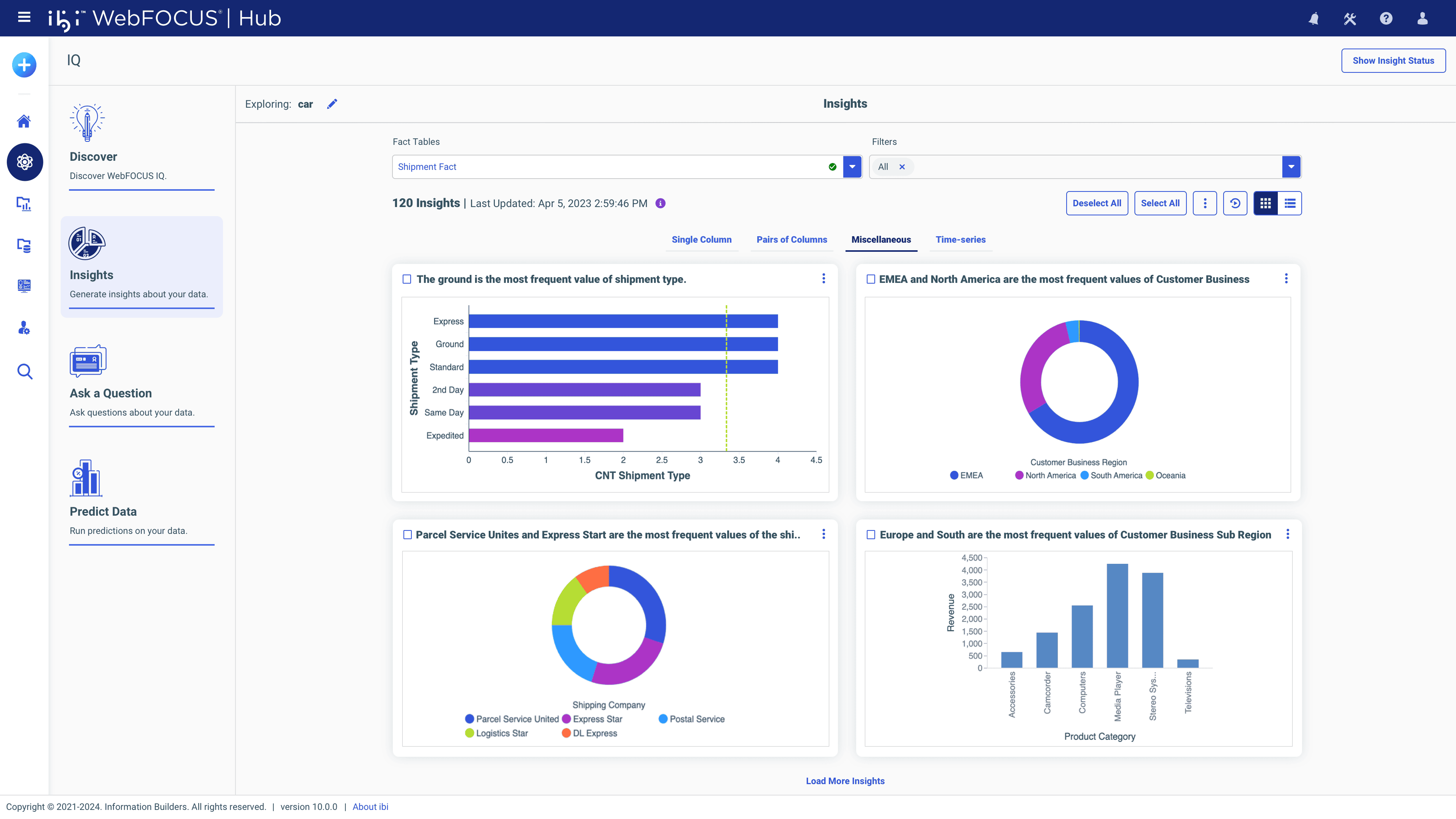
Insights: Scannable card-based results
NLQ in IQ
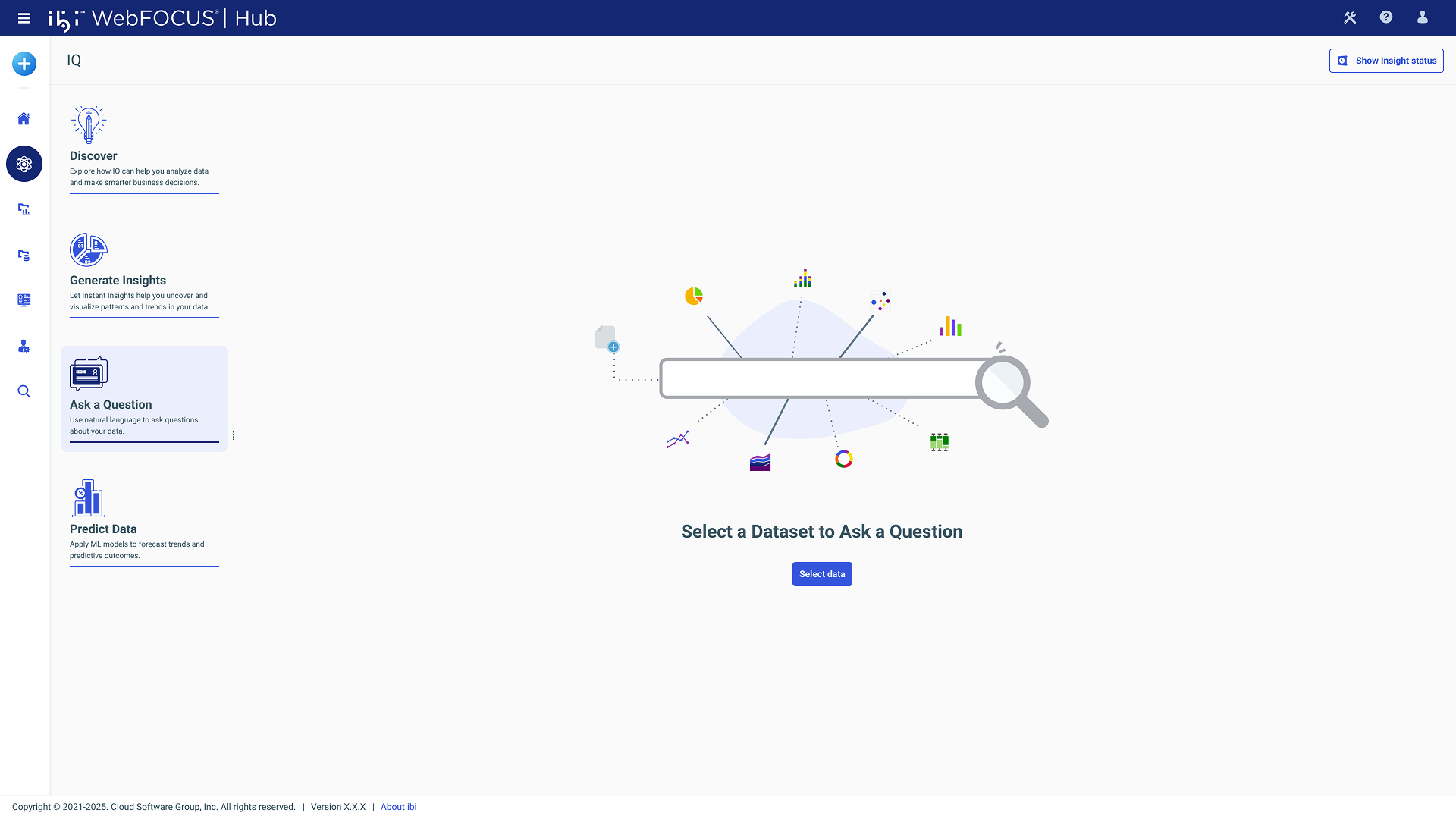
NLQ: Ask questions in plain English
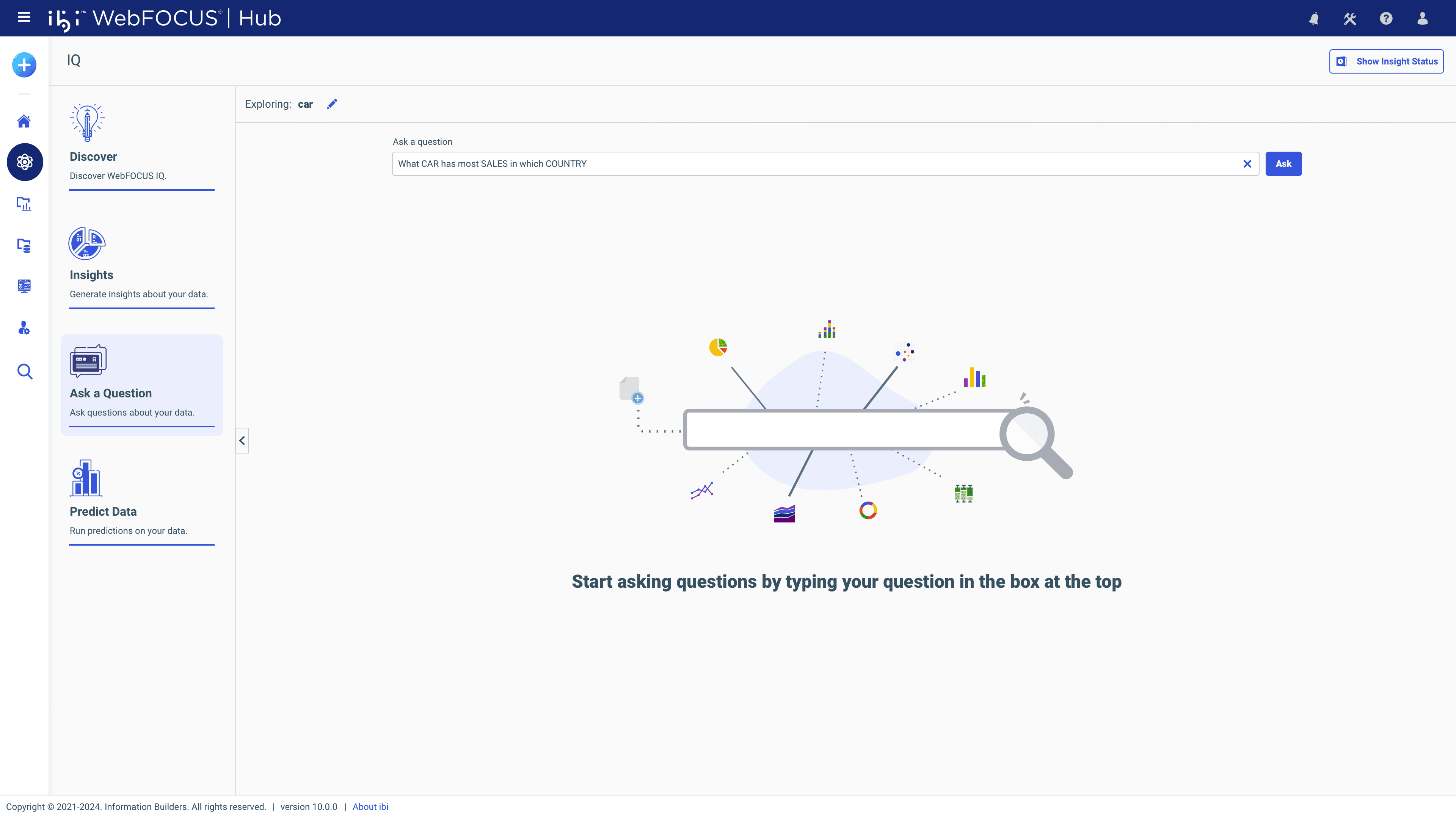
NLQ: Data selected state
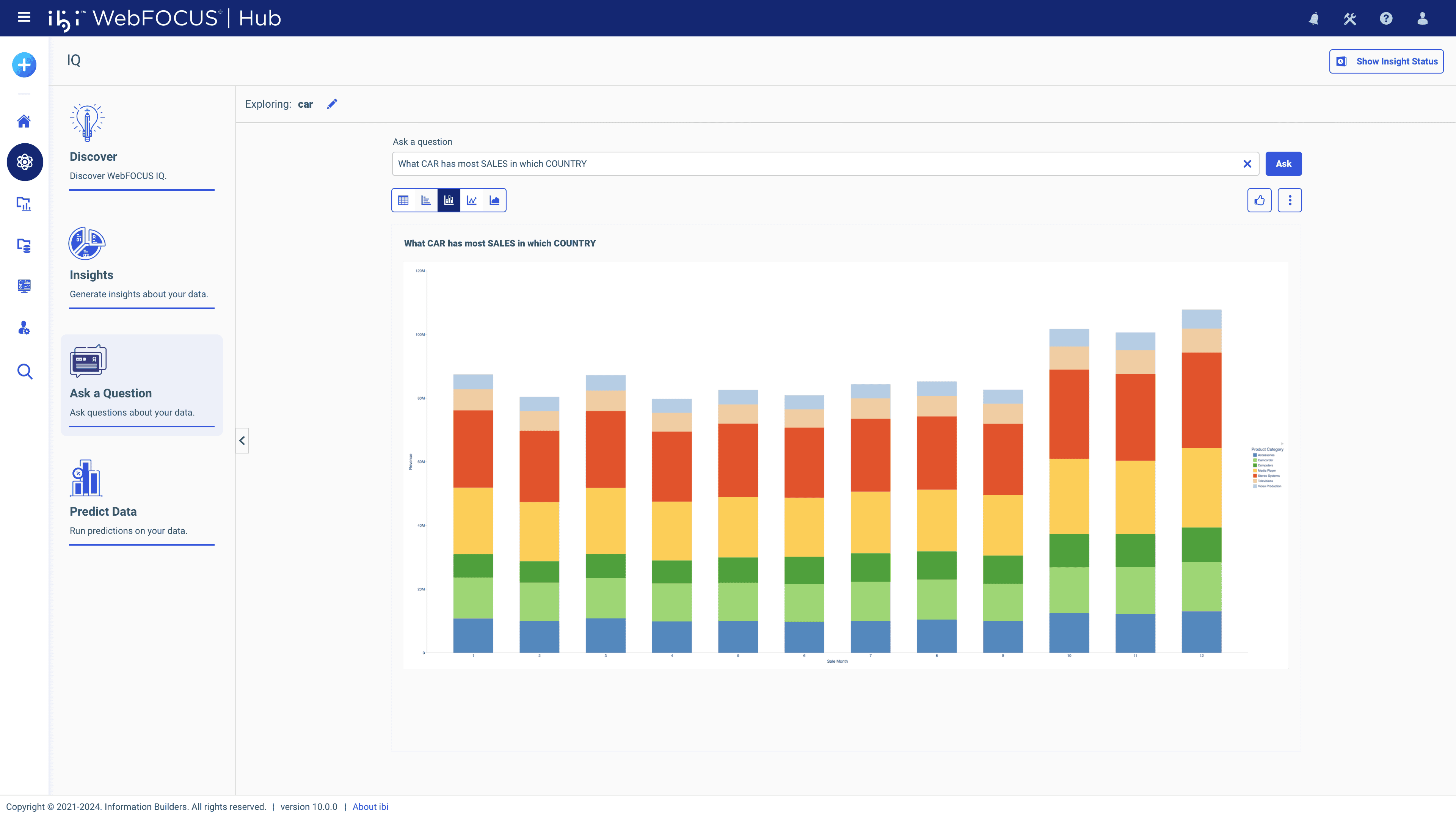
NLQ: AI-generated chart
ML in IQ
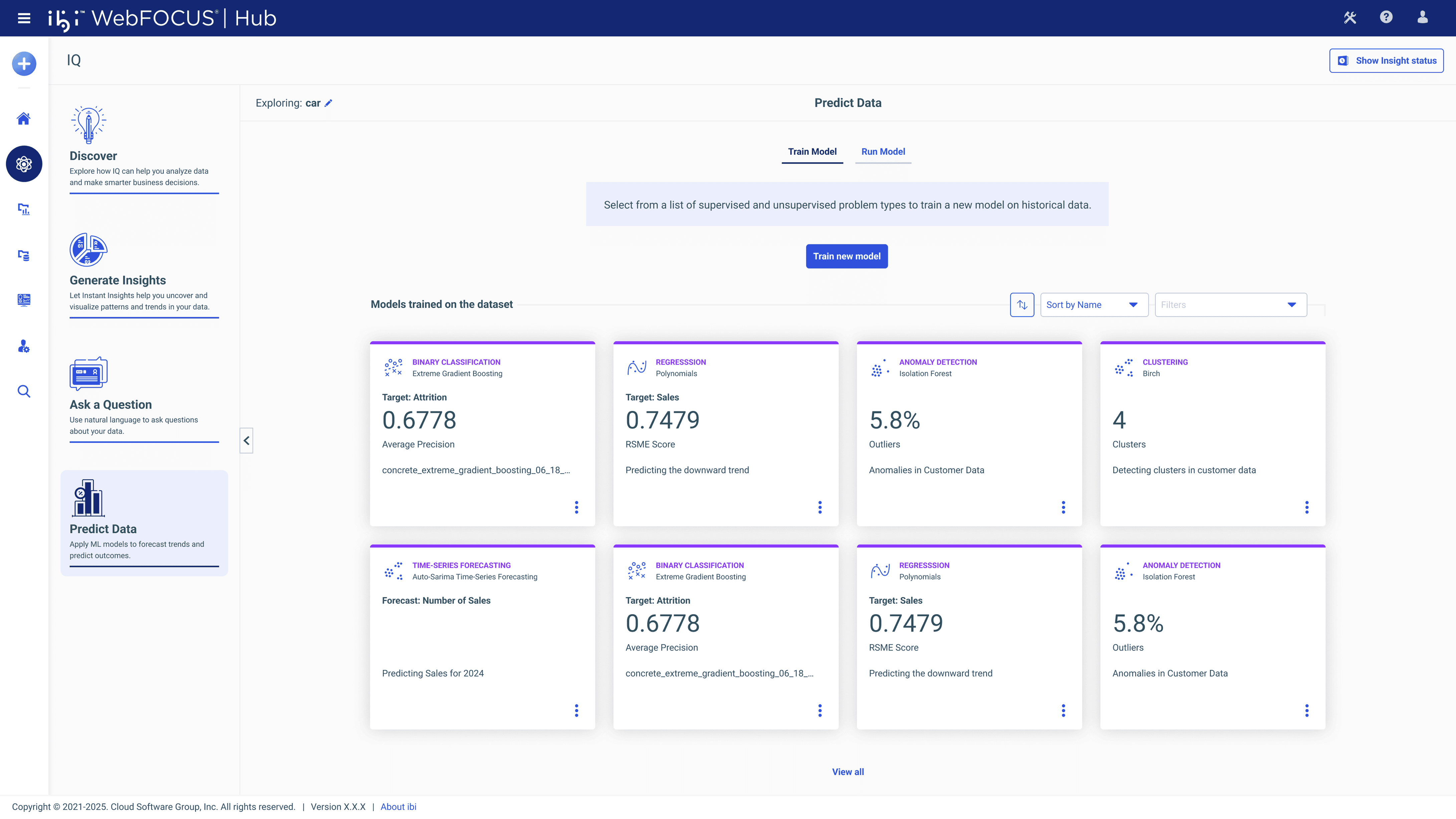
Predict Data landing — inside IQ
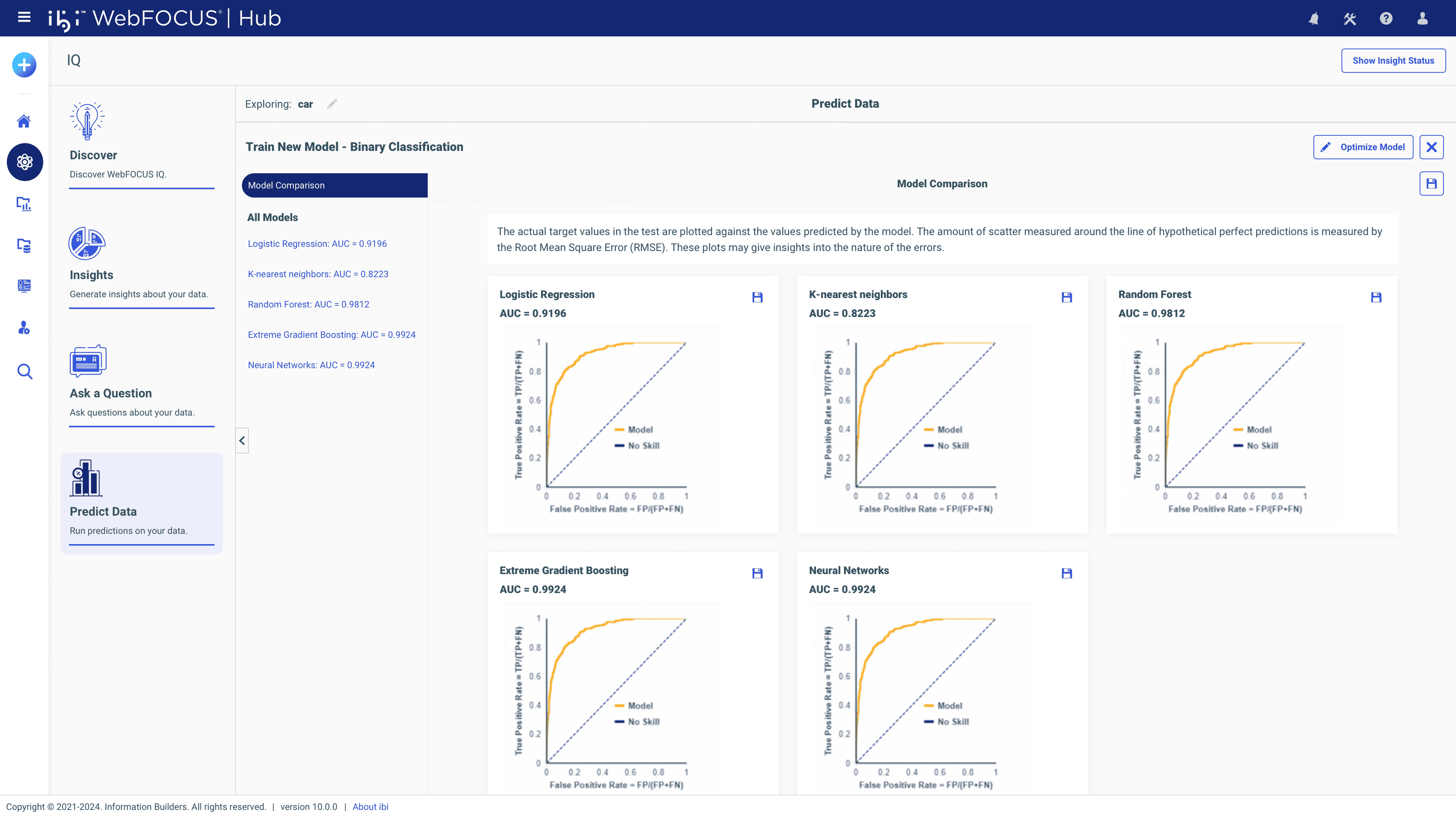
Compare models in context
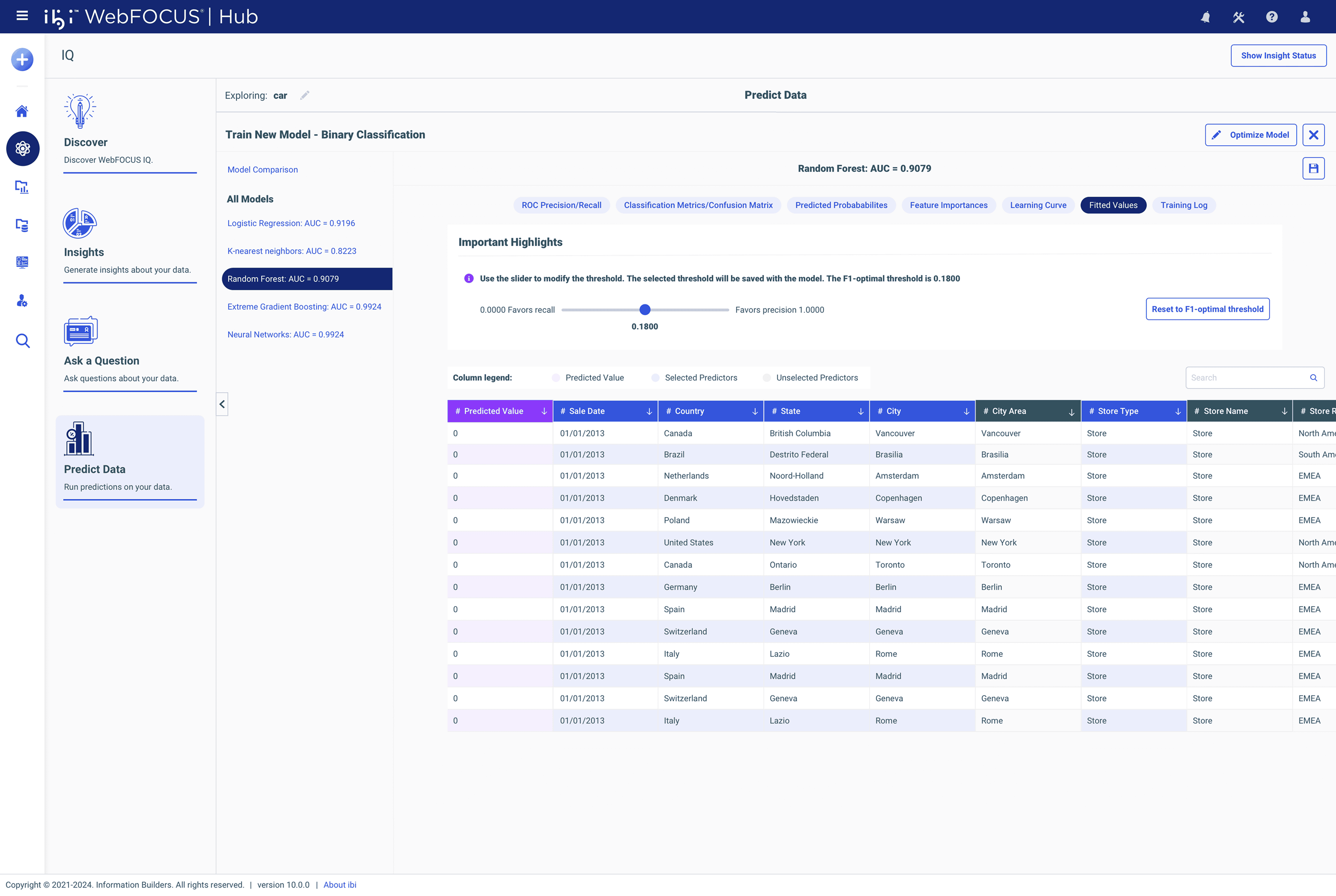
Model results — fitted values
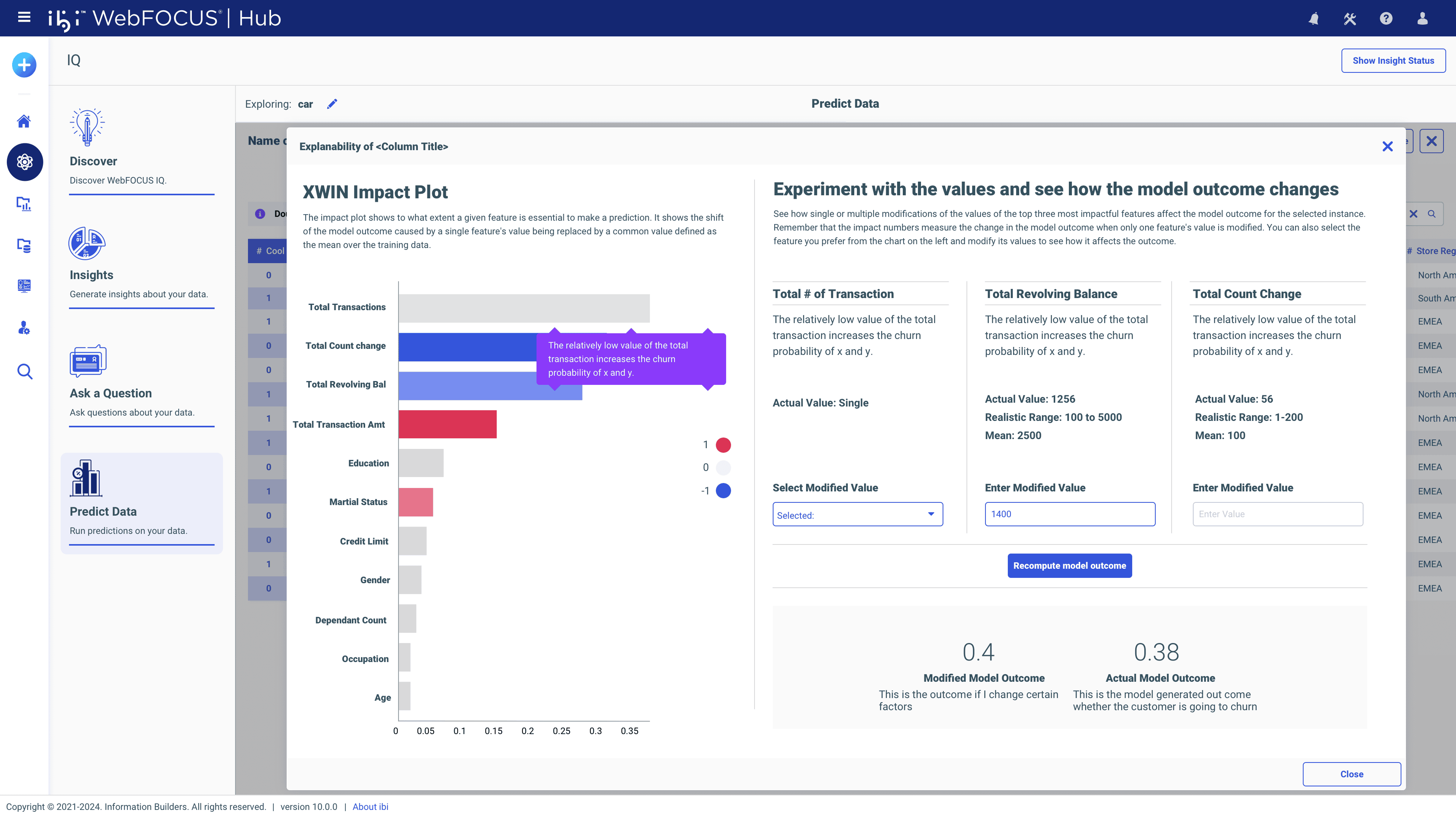
Run model — explainability view
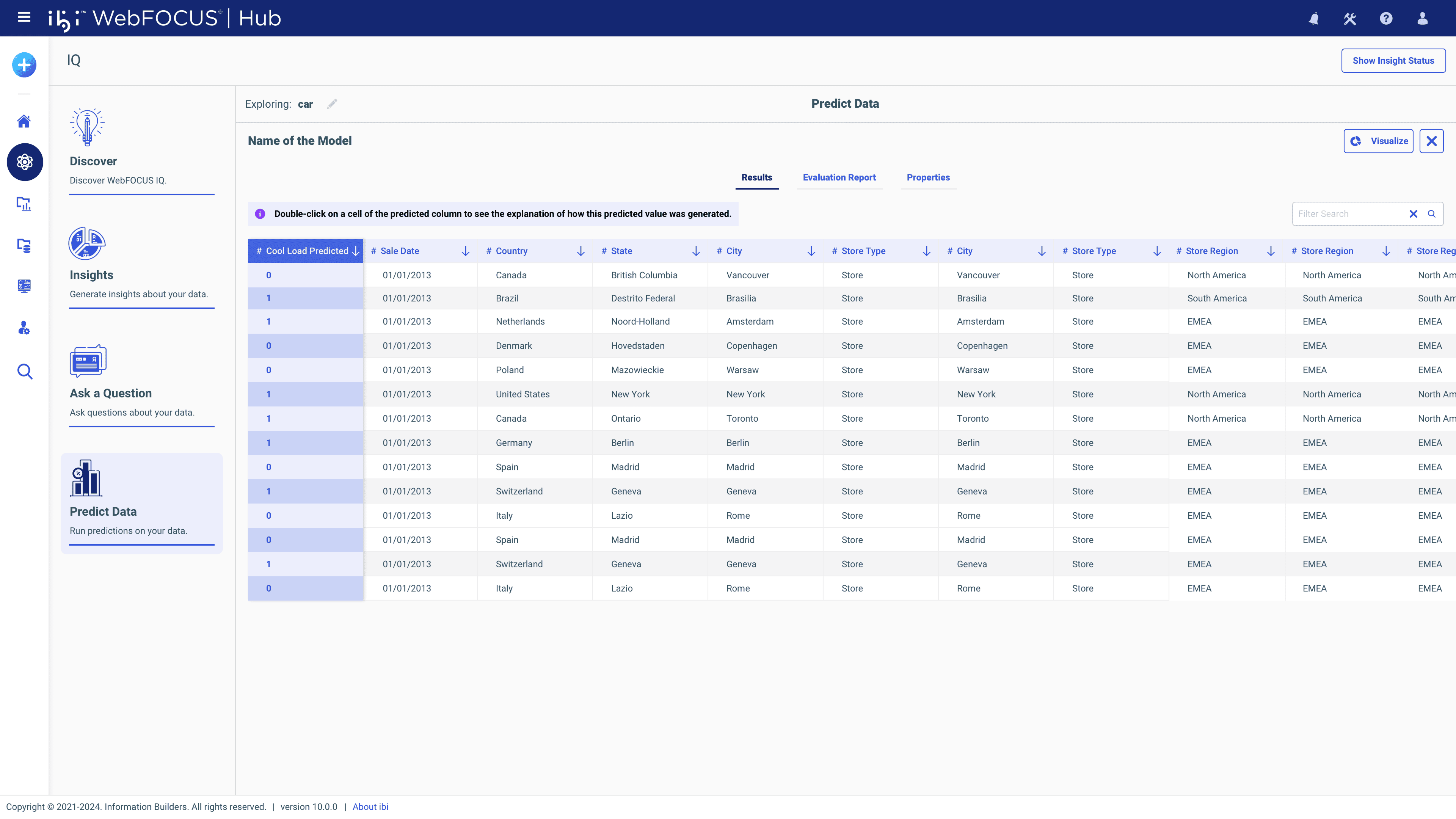
Run model — prediction results
Preview Data in IQ
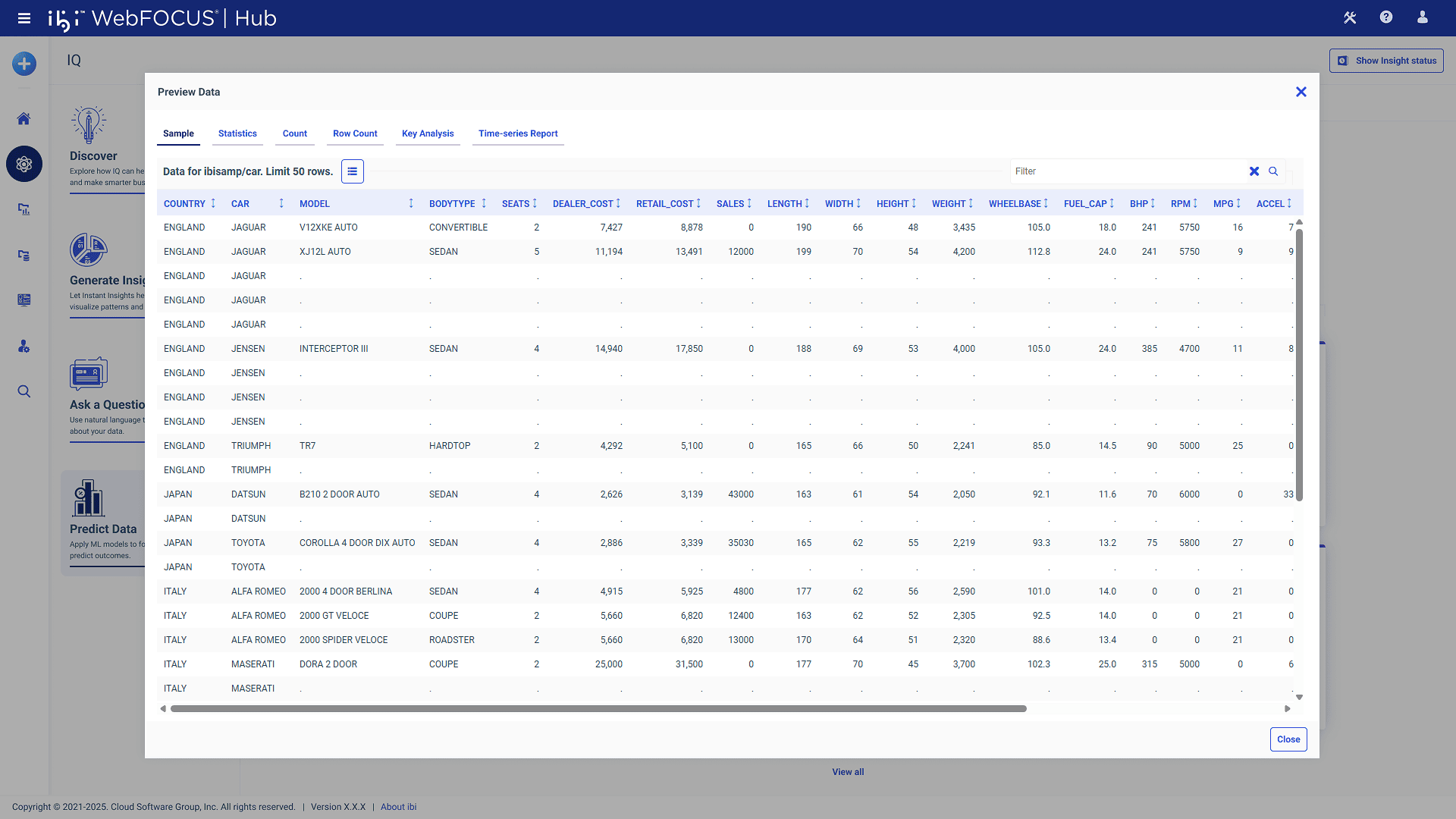
Preview data — sample tab
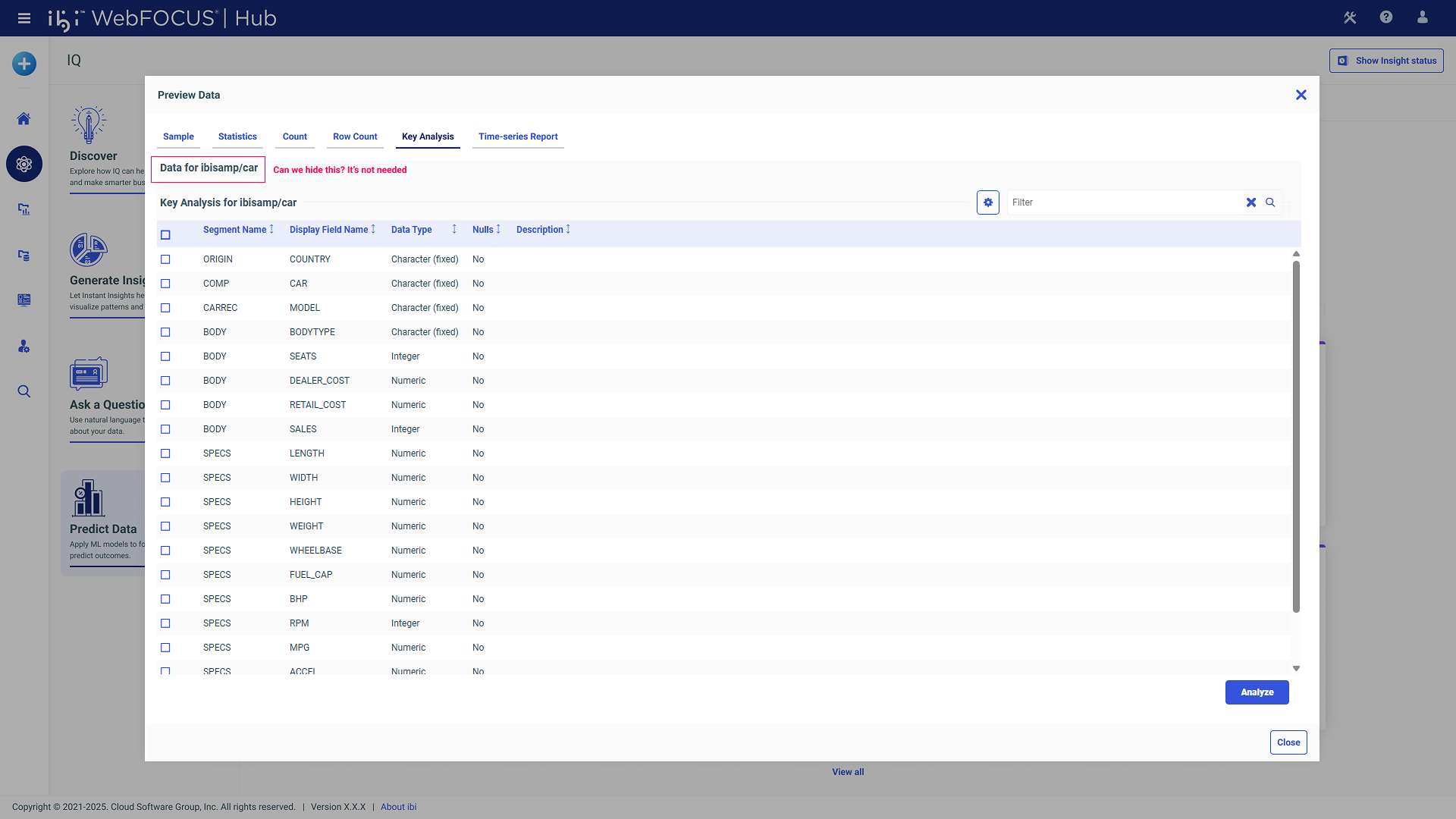
Preview data — key analysis
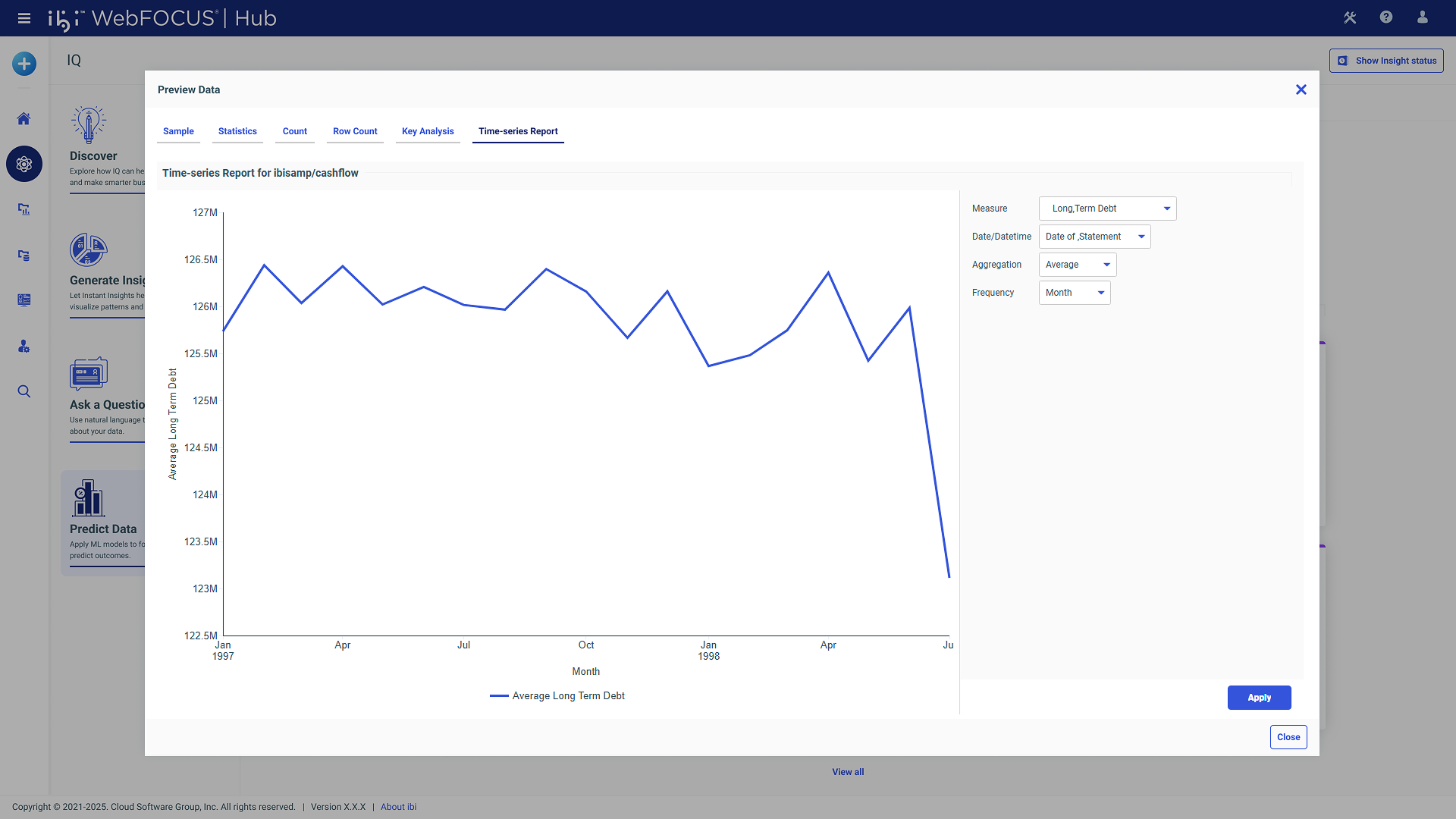
Preview data — time series
IQ Walkthrough
Director of Engineering. Principal Data Scientist. Head PM. Lead Architect. All decades of tenure. I was 2 years in. Karishma and I were the only new people in the room.
Veterans with 20 to 35 years at WebFOCUS. My PM and I onboarded together. We pushed the vision together.
It hit me later — I was arguing about data flows and ML architecture with people who'd been here for decades. And they were listening.
NLQ redesign + Phi-3 model upgrade drove +25% adoption. Customers looked forward to NLQ the most. The Hub brings all of it — NLQ, Insights, ML — front and center.
NLQ adoption from discoverability alone. No feature changes. The highest-leverage design work: making existing features findable.
Scattered tools unified into one Hub. The patterns became the platform's AI strategy foundation. NLQ + Insights live. Hub implemented — final QA pending at departure.
We co-created this project as a team. The features didn't change. The visibility did. That's the highest-leverage design work there is.
“Anuja led UX design initiatives with remarkable creativity, empathy, and precision. She consistently demonstrated a deep understanding of user-centered design and the ability to translate complex product requirements into intuitive and visually engaging experiences. What truly stands out is her collaborative spirit and problem-solving mindset.”
— Karishma Khadge, Senior Product Manager
“Anuja made a significant impact modernizing UX across our legacy enterprise products. She brings a rare combination of strategic thinking, design intuition, and the ability to work seamlessly across product, engineering, and business teams. Anuja is bold in her ideas and consistently proactive in turning complex problems into practical, user-centered solutions.”
— Vijay Raman, VP of Product Management
When I returned from maternity leave, the engineering team shared that they valued the way I approached design — understanding the system, asking the right questions, making informed decisions. The experience reinforced something I already believed: context isn't transferable through documentation alone. It comes from genuine curiosity and investment in the problem.
Tutorials & Onboarding: Initially proposed a dedicated "Get Started" panel. Through iteration, we improved the tutorials, Discover page, and Explore Data header instead — better UX, same goal.
Ecosystem Integration: Connect ReportCaster + IQ to auto-schedule generated insights. NLQ as a chat interface for the entire platform.